Sunday, July 24, 2022

Funny Farm by Laurie Zaleski

Funny Farm by Laurie Zaleski is a well-written, interesting, and heartwarming memoir subtitled My Unexpected Life with 600 Rescue Animals. She owns and runs the Funny Farm Animal Rescue in New Jersey and tells in the book the story of her life from a young age interspersed with stories of animals on the farm.

Zaleski grew up under very different circumstances that most, with her mother at the age of 26 leaving her abusive husband and taking Zaleski and her two siblings to scrape out a living in a rented shack in the woods. Her mom, Annie McNulty, was persistent and resourceful, taking on whatever work she could get in order to have food. She also brought home animals from her job cleaning cages at the local Animal Control. The family had little money, but over time would have in and around their house animals including dogs, cats, chickens, roosters, geese, raccoons, goats, sheep, pigs, and a horse. 

While her mother was a good and kind person, caring for animals in need and raising her children well even with them having no money, Zaleski’s father was a horrible one, almost certainly killing their dogs and horse as an act of revenge for his family leaving.

Zaleski is a good writer and it’s a nice story she tells, one of grit and care. The stories of her animals at the Funny Farm rescue are great ones, including those of oddball animal friendships, with Hope the blind kitten and Jello, her seeing eye duck, Lorenzo the llama and his donkey friend Jethro, and Yogi the steer and his alpaca friend Cooper. Also wonderful are the stories of first Chucky and then Tucker, dogs with megaesophagus. It was difficult for them to keep food down so they had to sit upright in a “Bailey Chair” that induces food to slide down and actually provide nutrients to the body, rather than being immediately thrown up.

She writes how kids see the rescue animals, during school assemblies and at the farm, and hear their stories of both getting along with others different than them and helping others with infirmities. It’s a great message and also compelling reading about inner-city kids being exposed to animals and a different way of life.

Monday, July 11, 2022

The Children's Blizzard by David Laskin

The Children's Blizzard by David Laskin is a solid work of nonfiction about the storm that hit the Midwest on Thursday January 12, 1888. It was known as the "Schoolchildren's Blizzard" because many of the dead were caught outside after leaving school, with estimates of the tool between 250 and 500 people.

Laskin notes how the storm came across the prairie through the Dakota Territory and into the new state of Nebraska. It caused the temperature to drop 18 degrees Fahrenheit in 3 minutes and couldn't really be said to be snowing, it was fast blowing crystals attacking people's exposed skin and flimsy clothing. In the region that would soon become South Dakota, there were deaths from the storm in 32 of the 34 counties east of the Mississippi River. Laskin provides fascinating writing on how for someone coming out of extreme cold exposure, abrupt movement can bring about cardiac arrest and death as the cold heart extremely sensitive. So many things came together for bad that day, ideal conditions for a huge storm, people exposed to it in what started as the first beautiful day in a while, and a failure of weather forecasting, done by the Signal Office, part of the U.S. Army.

The area the brunt of the storm was felt in was populated by immigrants, many German or Scandinavian. They were enticed by the Homestead Act, where the U.S. government gave adults 160 acres in exchange for five years of farming, and found a hard life, one that required their children to do a tremendous amount of labor to try to help the family scratch out a living. Along the way they encountered extreme weather, insects in the form of enormous grasshopper swarms that would destroy crops, fires that would devastate their fields, and solid ground that often wasn't conducive to farming.

In writing about the storm of 1888, Laskin provides fascinating content about the physics of weather and about the people, he tells so many interesting stories of schoolteachers making decisions of whether to send their students out in the conditions or keeping them in, or trying to take them to safety. About the stories Laskin told of people dying, he noted in the afterword using poetic license to describe what someone might have thought, said, or did prior to dying, with his choices based on interviews or accounts of people's personality. It seemed this somewhat detracted from the effort as the book contains in some parts text that it didn't seem possible to actually be known. Laskin also covers how in the aftermath of the storm, newspapers had their stories with more of a heroic bent to them, in part due to pressures to not dissuade people from moving to the region and stemming the population growth there, something which happened anyways. Drought came several years later to the area, then a financial panic and depression that caused those who had borrowed against their homesteads to go bankrupt. By the late 1890s, over 60% of the pioneer families had abandoned their homesteads. It was hard living in a region, with one of the more calamitous events to strike it chronicled well.

Where the Crawdads Sing by Delia Owens

Where the Crawdads Sing by Delia Owens is a well written and interesting novel that's a surprise mega-success. Its got over 12 million copies sold as of January 2022 and came out in the summer of 2018 to little advance acclaim, written by a first-time novelist. Owens is a retired wildlife biologist in her 70s, with her previous works nonfiction accounts of the decades she spent in Botswana and Zambia.

The book is set in the marshes of North Carolina between 1952 and 1969 and covers the story of a girl born exceedingly poor, living apart from society in a shack outside of town and forced to live on her own after first her mother, then siblings, and eventually father exit her life, leaving her to fend for herself from the age of ten. Her life and fleeting interactions with other people is chronicled by Owens and it's an engrossing story, blending together family trauma, natural history, romance, and mystery, and has been made into a movie executive produced by Reese Witherspoon.

The book has so many elements I love, it's good writing from Owens, about someone with a life completely different than I'm familiar with as she's living on her own in a fringe society of people eking out a life in the swamps, with the natural world heavily featured, and written by someone who lived in Africa among animals and who wrote an unexpected bestseller. It's great stuff and I enjoyed it quite a bit.

Thursday, June 30, 2022

Africa in My Soul by Cheryl King Duvall

Africa in My Soul by Cheryl King Duvall is a good book subtitled Memoir of a Childhood Interrupted.

Duvall was ten when her parents went to become missionaries in Africa, leaving behind in Georgia her fifteen year old sister and taking she and her two younger siblings to Nigeria. Her sister had to stay back and live with strangers, not because there wasn't a religious school she could attend in Africa, but because it wasn't the right type of religious school.

Duvall in Africa was stuck in mission boarding schools for 9 months of the year, under the care of people who forced the missionary kids to refer to them as auntie or uncle, and was the victim of an episode of sexual abuse by a doctor at the mission. Her story shows awful it is when parents think they're making sacrifices, in this case to become missionaries, but really they're making them on their children's behalf. 

The book shows the hardships Duvall faced in Africa, and also how the continent an amazing place, one full of beauty and also people who turned on one another, with there a civil war while she in Nigeria.

Saturday, June 18, 2022

Love is the Killer App by Tim Sanders

Love is the Killer App by Tim Sanders is a solid read from 2002 with the subtitle How to Win Business and Influence Friends. The idea put forth by Sanders is to be what he calls a lovecat, someone who gives freely to others, and the book is organized into three sections: your knowledge, your network, and your compassion. 

About your knowledge, Sanders writes that to be able to share information, you first have to acquire it. It's about books, reading lots of books, having a system to remember what you've read, and then passing on details to those it can help. 

About your network, Sanders notes to keep track of your contacts, write down details about the people you interact with so that you remember. Collect relationships and then connect people with one another, follow up and make introductions. 

About your compassion, Sanders quotes a definition of love as being the selfless promotion and growth of the other. He writes of the need to care, be human, and tell people things that matter which you may otherwise guard. Also highlighted is that compassion comes back; it refills those who give it.

Going back to the section on knowledge, Sanders notes to let reading be the thing that propels you, it doesn't require genius, and then you learn things, share them with your network, build out that network and help others. It's a good read from Sanders and some of the books he recommends are the following:

Net Gain by John Hagel and Arthur Armstrong

Information Masters by John McKean

The Brand Mindset by Duane Knapp

The Experience Economy by Joseph Pine and James Gilmore

Permission Marketing by Seth Godin

Customer Capitalism by Sandra Vandermerwe

The Innovator's Dilemma by Clayton Christensen

The Anatomy of Buzz by Emanuel Rosen

Getting in Your Customer's Head by Kevin Davis

Toward a Psychology of Being by Abraham Maslow

Leading the Revolution by Gary Hamel

Building Brandwith by Sergio Zyman and Scott Miller

Race for the World by Lowell Bryan, Jeremy Oppenheim, Wilhelm Rall, and Jane Fraser

Differentiate or Die by Jack Trout and Steve Rivkin

The Profit Zone by Adrian Slywotzky

Making it Happen by Mackenzie Kyle

The Circle of Innovation by Tom Peters

New Rules for the New Economy by Kevin Kelly

Sunday, May 29, 2022

Finding the Mother Tree by Suzanne Simard


Finding the Mother Tree by Suzanne Simard is a solid work of nonfiction subtitled Discovering the Wisdom of the Forest. Simard is a professor of forest ecology and she writes an autobiography about her life and work with trees in British Columbia, where she grew up in a family of foresters, with logging a big part of their lives. 

She describes the forest as a living organism, one where trees share with one another what they need to survive. She writes how rather than reducing certain types of trees, diversity is needed for a healthy forest, something that goes against the "free to grow" way forests previously had managed, with killing alder to to try to foster the growth of more valuable pine. Simard writes how trees are connected through a fungal network of mycorrhiza, and how if you kill the mycorrhizal fungi that connects the trees, you ultimately reduce the health of the entire forest, pine and all. 

The book jacket notes it as "a story of love and loss, of observation and change, of risk and reward" and it's a good mixture of ecology and personal memoir. Simard provides a dual narrative about connections, those in the forest and those in her life with those she loves. It's a compelling story which has been optioned for a movie starring Amy Adams and more can be learned about at https://mothertreeproject.org.

The Glass Hotel by Emily St. John Mandel

The Glass Hotel by Emily St. John Mandel is a well-written and interesting novel from the writer of Station Eleven. This book includes characters from Station Eleven and accomplishes the same feat of a sweeping story that includes characters through the years. 

In The Glass Hotel, Mandel writes of a woman who leaves behind her past working at a secluded hotel in British Columbia for a life of luxury with a financier in New York, only to have it taken away when his work revealed as a Ponzi scheme. It's an elaborate tale well told of she, her wealthy beau, her brother, and others in their lives.


Tuesday, April 26, 2022

Creativity, Inc. by Ed Catmull

Creativity, Inc. by Ed Catmull is by one of the co-founders of Pixar and a solid book subtitled Overcoming the Unseen Forces That Stand in the Way of True Inspiration.

Catmull writes how he in high school loved Disney animation, in part from the way Walt Disney explained the creation of it, and graduated from the University of Utah with degrees in physics and computer science and a Ph.D. in computer graphics. 

He was hired to try to start a computer animation company, and two years following the release of Star Wars in 1977, George Lucas hired him away to run his new computer division, with the primary product the Pixar Image Computer. Lucas in 1986 sold the Pixar division to Steve Jobs, with Catmull and John Lasseter remaining in charge. They began to make commercials along with short films. A three-picture deal was made with Disney in 1991, where Pixar would make the films, and Disney would produce and own them. In 1995, the first movie was released, Toy Story

It's a good book that has a number of solid insights on how to create and manage for a creative culture, with some of those (italics are mine) below:

Teams - If you give a good idea to a mediocre team, they will screw it up. If you give a mediocre idea to a brilliant team, they will either fix it or throw it away and come up with something better. 

Coaxing out ideas - It isn't enough merely to be open to ideas from others. Engaging the collective brainpower of the people you work with is an active, ongoing process. As a manager, you must coax ideas out of your staff and constantly push them to contribute.

Encouraging candor, stamping out fear - There are many valid reasons why people aren't candid with one another in a work environment. Your job is to search for those reasons and then address them. The same concept applies to fear in an organization.

Mechanisms for getting feedback - In general, people are hesitant to say things that might rock the boat. Braintrust meetings, dailies, postmortems, and Notes Day are all efforts to reinforce the idea that it is okay to express yourself. All are mechanisms of self-assessment that seek to uncover what's real.

Trust - It is the manager's job to make it safe to take risks. Trust doesn't mean that you trust that someone won't screw up. It means you trust them even when they do screw up.

Communication - A company's communication structure should not mirror its organizational structure. Everybody should be able to talk to anybody.

Interdependence - The healthiest organizations are made up of departments whose agendas differ but whose goals are interdependent. If one agenda wins, we all lose.

Candor - Good criticism or praise is specific. Also, feedback and candor is built on empathy, being in something together. 

Making the product great - Don't confuse the process with the goal. Working on our processes to make them better, easier, and more efficient is an indispensable activity and something we should continually work on, but it is not the goal. Making the product great is the goal.

Nothing to See Here by Kevin Wilson

Nothing to See Here by Kevin Wilson is a fun novel with a wild storyline...

Lillian and Madison were unlikely roommates and yet inseparable friends at their elite boarding school. Then Lillian had to leave the school unexpectedly in the wake of a scandal and they’ve barely spoken since. Until now, when Lillian gets a letter from Madison pleading for her help.

Madison’s twin stepkids are moving in with her family and she wants Lillian to be their caregiver. However, there’s a catch: the twins spontaneously combust when they get agitated, flames igniting from their skin in a startling but beautiful way. Lillian is convinced Madison is pulling her leg, but it’s the truth.

Thinking of her dead-end life at home, Lillian figures she has nothing to lose. Over the course of one humid, demanding summer, Lillian and the twins learn to trust each other—and stay cool—while also staying out of the way of Madison’s buttoned-up politician husband. Surprised by her own ingenuity yet unused to the intense feelings of protectiveness she feels for them, Lillian ultimately begins to accept that she needs these strange children as much as they need her. Couldn’t this be the start of the amazing life she’d always hoped for?

It was really an enjoyable read.

Thursday, March 31, 2022

The Eye Test by Chris Jones

The Eye Test by Chris Jones is by one of my favorite writers, someone who writes great kickers, or endings to stories. The book is subtitled A Case for Human Creativity in the Age of Analytics and the book jacket notes that Jones makes the case for the human element-for what smart, practiced, devoted people can bring to situations that have proved resistant to analytics. There's some great stories told in the book, with the ones that stood out to me from each section noted below...

Entertainment - Written about is the movie Chef, how it had two rather than three acts, never with the expected turn for the worse. Also there's a great quote from Teller, of Penn & Teller fame, with "sometimes magic is just someone spending more time on something that anyone else might reasonably expect." 

Sports - There's stories about baseball managers Mike and Justin Jirschele, pitcher Barry Zito, and carpenter Mark Ellison, profiled in a New Yorker piece.

Weather - Jones writes that "the more abnormal the situation, the more likely a skilled human will outperform a machine." This ties into the story of amateur weather forecaster Eric Berger, who through his website Space City Weather guided people through Hurricane Harvey and the calamitous rain and flooding it brought to Houston.

Politics - There's mention of the painstaking approach to research that Robert Caro took for his book The Power Broker. Also covered is the humanity of John McCain, and how that had scaffolding built around it as he became the Republican nominee for President, but then came out again in his concession speech. 

Crime - It's noted how something like facial recognition technology can be completely wrong if built built on faulty algorithms, often by people with biases. There's also a great quote from retired NHL player Shawn Thornton on time of possession, with it told by Eric Engels on his Twitter account. Also covered is the 2010 police interrogation of Russell Williams, later the subject of the CBC documentary episode The Fifth Estate.

Money - Jones tells the story of Kenneth Feinberg, a lawyer who dispensed the September 11th Victim Compensation Fund. He met with every person who was to receive money, and the first he met with, the widow of a firefighter, said that she wanted the money quickly, within 30 days. This was because she had terminal cancer and needed to establish a trust fund for her two soon to be orphaned children. Jones also covers how Feinberg on back to back days met separately with women who lost their partner and father of their children, with neither woman knowing that the deceased had a second family. Also covered in this section was the 2018 retirement news conference of Dallas Cowboys tight end Jason Witten and the story of Peter Good and his designing the iconic Hartford Whalers logo, with its use of negative space. 

Medicine - Narrative medicine is covered, the idea of treating patients not as cells that are either sick or healthy, but as people, with this humanizing of medicine something to benefit both patients and care providers.

The Alchemist by Paulo Coelho

The Alchemist by Paulo Coelho is a novel that features the main character following his heart, risking everything to seek out his destiny. 

The book is the tale of an Andalusian shepherd boy, Santiago, who has a dream of hidden treasure buried at the pyramids in Giza and goes to Egypt, in pursuit of his Personal Legend. 

The alchemist is someone he meets during his travels, someone who can turn lead into gold, and Santiago ultimately discovers what he was looking for, something that he couldn't have arrived at without going through the journey and struggle. It's very much a self-help book, and one of the quotes noted by Amazon as most highlighted in the Kindle version is "everyone seems to have a clear idea of how other people should lead their lives, but none about his or her own."

Sunday, February 27, 2022

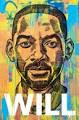
Will by Mark Manson and Will Smith

Will by Will Smith and Mark Manson is a solid portrait of the actor, with the autobiography written along with the author of The Subtle Art of Not Giving a F*ck, a solid book with parallels to this one.

Smith grew up in Philadelphia, the son of a successful business owner, one who also beat his wife, for the last time when Will was thirteen years old. Smith’s father saw the world in terms of commanders and missions and he and his siblings were pushed by their father to succeed through hard work. 

The book tells the story of a twelve by twenty cement wall that Smith and his younger brother were directed to build from scratch, when the boys were eleven and eight years old. The lesson from their father was that you show up and go to work, every day. This idea was latched onto by Smith as he developed first his career as a rapper and then movie star. He was a worker, working harder than others to get where he wanted to go. 

Smith was a natural comedian and entertainer when he was a kid and from his father he got discipline, from his mother, education, from his grandmother, love. Smith came from a broken home and as such, he wanted to be the pleaser, making everyone happy. He got introduced to hip-hop as a teen and practiced incessantly to be the best hip-hop MC. He was a senior in high school when he met Jeff, three years older than him and soon to be known as DJ Jazzy Jeff and Smith's longtime partner in music. They quickly became huge in the Philadelphia hip-hop scene, recording an album, having a hit song, and hitting the road on tour. At 20, Will was a famous rapper, winning a Grammy for best rap performance with he and DJ Jazzy Jeff's song Parents Just Don't Understand and selling three million records with their album, He's the DJThen their next album, In This Corner..., flopped. The gangsters he hung with in Philly were all likely about to go down and Smith left for Los Angeles after asking for money to get settled from his gangster friend, with that friend shot and killed three days later as people were turning on each other with the Feds closing in.

After moving to LA, Smith was in Detroit to do a concert and got a call from Quincy Jones who wanted him to come to his birthday party that night in Brentwood. There at the party, Jones asked Smith to do an audition showing he could act, thinking about what would become The Fresh Prince of Bel-Air. Smith at first was hesitant to do the audition then and there, wanting time to prepare, and Jones convinced him to do it as the opportunity was right in front of him. Smith read from a script for twenty minutes and before he left the party, there was a contract in place for him to shoot a pilot for the TV show. The party was in March 1990, the pilot episode aired in September of that year and the show became an immediate success. 

Smith set out to do movies, with one of his first Six Degrees of Separation, followed shortly after by Bad Boys, Independence Day, and Men in Black. He then received Academy Award nominations for Ali and The Pursuit of Happiness. Harkening back to the importance of hard work that he learned from his father, Smith saw that one of the secrets to being a global movie star is the gate outside the US, one of the secrets to that gate is promotion, so he put in more hours promoting his films than other actors did on theirs. 

It's a good story, one of hard work, but also one of being in the right place at the right time, and then when the opportunity presents itself, jumping at that. It’s also interesting reading later in the book of how that singular focus on achievement made things difficult with his wife and kids. He would put the same type of expectations on them to succeed that his father had put on him, and for him to achieve, he often had to focus on himself, and not his family. Additionally, his need to control, win, and be at the center of things jeopardized the happiness of his family. He had to accept and relax. 

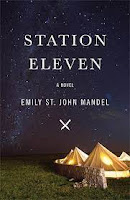
Station Eleven by Emily St. John Mandel

Station Eleven by Emily St. John Mandel is a novel that tells the story of pandemic that struck the world with lightning-fast ferocity, killing the large majority of people on earth. 

The story told is set twenty years in the future, with those who survived living not as citizens of countries, but rather in small settlements of people, living without electricity, surviving largely off the land.

The book does an interesting job of weaving together stories, featuring people as they are twenty years since the pandemic struck, what they were like at the time it occurred, and how their lives intersect with those of other characters. It can be a bit confusing at times keeping track of the connections, but it's an ambitious effort taken and an interesting story told in the novel.


Sunday, January 30, 2022

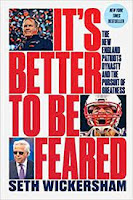
It's Better to be Feared by Seth Wickersham

It's Better to be Feared by Seth Wickersham is a solid biography of Tom Brady and look at the New England Patriots under Bill Belichick. There's a huge amount of ground covered well in the book and below are some of the sections from it that reflect on the Amazon Kindle app as those most highlighted by others:

"The New England Patriots were a subculture within a spectacularly unhealthy world. They were defined by many of the things that defined America during the first two decades of the current century: an embrace of overwork; a refinement of craft to a previously unseen level; empiricism and a love of data, along with the creation and marketing of pseudoscience; tribalism and both its cohesive and splintering features; the pursuit of agelessness; an erosion of ethics; and finally, a zero-sum ethos toward victory."

"All athletes, especially great ones-especially those with impossible expectations for themselves-swing between extreme confidence and extreme insecurity in a way unfathomable to fans."

"Belichick's football ideology was the lack of an ideology."

"For Brady, uncertainly prompted a strange reflex. Every time he was doubted, or he doubted himself, whether he admitted it or not, he upped the stakes, to prove others wrong and to prove himself to himself."

"He taught himself to love-to be addicted to-the feeling of improvement."

"Jerry Seinfeld was once asked how he summoned the will to be great at comedy, even after his legend was secure. He replied that it wasn't about will at all. Will was required to pass on cake after dinner; this was love. He loved everything about comedy, from finding the precise language for a joke to perfecting its delivery. Belichick was the same. 'I enjoy all of it,' he later said. 'It beats working.'"

"It might not be enough to just love your job. You had to want to live in the world the job created. Working with people you like, a tribe with a common goal, would make your professional life far happier than any accolade, salary, or a company's prestige could. You need to do the work you love, at a place and with people you love. You have to feel-Brady repeatedly returned to this work-'appreciated.'"


The Lincoln Highway by Amor Towles

The Lincoln Highway by Amor Towles is an engaging novel with compelling characters. The story is set in 1954 and features a young man recently released from a detention facility who embarks on a cross-county road with his young brother who he's responsible for, and which intersects with two others from the facility.

The book has a number of interesting people in it and they make choices other than might be expected, with those in some cases fascinating and in others, unsatisfying. The book certainly has its high points, but the ending of it feels to be a downer.


Sunday, January 16, 2022

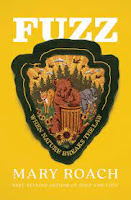
Fuzz by Mary Roach

Fuzz by Mary Roach features the subtitle When Nature Breaks the Law and the book jacket notes it as investigating the world where wildlife and humans meet. 

Chapters in the book include those on bears eating from trash cans, leopard attacks in India, determining if someone killed by animal, and counting cougars in the wild. 

Roach covers the lengths gone to in an attempt to mitigate the disruptive impact of animals on people. It's a quirky book and has some interesting stories in it, particularly those that involve life or death encounters between people and wildlife.

Thursday, December 30, 2021

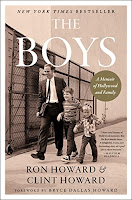
The Boys by Ron Howard and Clint Howard

The Boys by Ron Howard and Clint Howard is a solid autobiography from the successful Hollywood actors (and director in Ron's case). It's a good story of them growing up, with their parents help all along the way.

Things got started when their actor father Rance took 3 1/2 year old Ronny with him to see a casting director in New York City in 1957 and left word that he had a son who was a fine actor. Ronny got a part out of that and then in 1958, the family moved to Los Angeles at the suggestion of Rance's agent who said parts more plentiful there. 

Rance was getting scattered work, but Ronny regularly got acting jobs, as he says, almost every part he auditioned for. Ronny and later Clint were tutored by Rance who taught them to prepare for auditions and parts as professionals, not requiring excessive retakes and focusing on getting the emotions of the role right. Additionally, their father always spoke to them very matter of factly, explaining to them the adult behavior they often witnessed on sets. 

Ronny landed in 1960 a regular role as Opie on The Andy Griffith Show and Clint as a child had a starring role in the series Gentle Ben and went on to act in many Star Trek shows and other vehicles. Ronny later played the role of Richie Cunningham on Happy Days and had a large part in the 1973 movie American Graffiti from George Lucas. He then went on to make movies, with his first real job as a director on the movie Grand Theft Auto when he twenty-three.

The book is an interesting and nice story about brothers growing up with lives very different than most, being show-business kids starring in hugely popular TV shows and having to navigate public school and comments from classmates. There were other problems to contend with, including Clint's drug addiction, but the family remained close and supportive. Ron also notes how much later he was an executive producer on and offscreen narrator for the show Arrested Development, and in the final season, there's an episode where Ron, his wife Cheryl, their four kids, and Ron and Clint's dad appears.

Friday, December 24, 2021

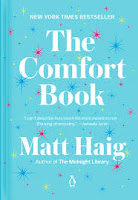
The Comfort Book by Matt Haig

The Comfort Book by Matt Haig is a nice read made up of short vignettes, with below from some of them:

A thing my dad said once when we were lost in a forest - If we keep going in a straight line, we'll get out of here. 

It's okay - It's okay to be broken. It's okay to like what you like. It's okay to be who you are.

Power - Our perspective is our world, and our external circumstances don't need to change in order for our perspective to change.

To remember during the bad days - It won't last. You have felt other things. You will feel other things.

One beautiful thing - Experience one beautiful thing a day. Just give yourself one simple reminder that the world is full of wonders.

Rain - You don't have to be positive. You don't have to feel guilty about fear or sadness or anger. You don't stop the rain by telling it to stop. It never rains forever. The storm may knock you off your feet. You will stand again.

Experience - We are not what we experience. If we stand in a hurricane, it doesn't matter how violent or terrifying the hurricane is, the hurricane is not us. The weather outside and inside us is never permanent.

Ferris Bueller and the meaning of life - This is a movie about Cameron. He is the emotional center of the film and makes the most significant transformation.

Growth - We grow through hard times. Growth is change. When everything is easy, we have no reason to change.

Clarity - You are here. And that is enough.

Realization - I used to worry about fitting in until I realized the reason I didn't fit in was because I didn't want to.

Aim to be you - If you aim to be something you are not, you will always fail. Aim to be you. 

Forgiveness - Forgiving other people is great practice for forgiving yourself when the time comes.

On Animals by Susan Orlean

On Animals by Susan Orlean is a solid book by the author of The Library Book, The Orchid Thief, and Rin Tin Tin among other nonfiction works. On Animals features various animal stories, with Orlean both as a third-party observer and first-party participant, and she notes "all of these creatures serve a purpose, even if that purpose is to have no real purpose other than to give a warm, wonderful, unpredictable texture to my life every day." 

Orlean provides compelling writing on both domesticated and wild or working animals, with some of the chapters that stood out noted below:

The It Bird - on raising chickens and how popular it's become

The Lady and the Tigers - including how there's more tigers in captivity than the wild

Little Wing - on homing pigeons and both that it's unclear how they navigate their way home, and if their owners move, they'll fly back to their original home if not enclosed

Where's Willy? - about Keiko, the orca star of the movie Free Willy, and the effort to release him to the wild, something never previously done with a captive killer whale

Lion Whisperer - about Kevin Richardson and his lions, also covers how little of the African wild is actually wild and the horror of lion hunting and negative effects of lion cub petting businesses

The Perfect Beast - on pandas and how unique they are

Lost dog - on the story of one couple's effort to find theirs

Farmville - on Orlean's life with animals and her moving from the New York countryside to Los Angeles

Sunday, November 28, 2021

Travels with George by Nathaniel Philbrick

Travels with George by Nathaniel Philbrick is a solid book subtitled In Search of Washington and His Legacy. Philbrick writes a first-person account of traveling with his wife and their dog on the same journeys that Washington took starting less than six months after his presidential inauguration in 1789.

Washington felt a great deal of pressure and consternation about being President and wanted to get out and be with the people of the fledgling country. He stayed in tavern houses and wanted to try to bring together Federalists who embraced the new constitution and Anti-Federalists who distrusted a strong central government. Washington started with a month-long tour of New England and the following year did a three-month-long circuit that took him to the South, covering thirteen states in total. 

It was interesting reading about Washington and his attempts to bring the country together, as well his attitudes and actions around slavery. There was also compelling mention of Washington's horrible teeth, and how wealthy people used to buy healthy teeth from others and implant them, replacing their rotted out teeth. 

The book is a good historical travelogue up and down the east coast, with Philbrick writing of his own life and interacting with people who would tell their stories of Washington and his actions.