Sunday, December 31, 2023

Going Infinite by Michael Lewis

Going Infinite by Michael Lewis is a compelling book about Sam Bankman-Fried, the now-convicted founder of FTX and Alameda Research. Lewis first heard of him at the end of 2021, when Sam took FTX to $1B in revenue, up from $100M in 2020, and $20M in 2019. The book largely chronicles his rise, with the end covering his rapid fall. It felt like a satisfying conclusion was lacking, largely because it not clear where the money went. 

Lewis covers how Sam went to MIT and interned and then was hired at Jane Street Capital. It's a high-frequency trading firm and it was fascinating reading about the interview process there, one centered around probability and chance. It was to determine how someone operates in an environment of uncertainty, how do they go about making decisions? The questions were all mental math around odds, like what amount of money would someone trade for a possibility of a larger amount of money. It was testing someone's relationship to information. 

Lewis covers how these type of calculations fit Sam perfectly and his decisions involved an expected value calculation. He would at the spur of the moment change a plan based on a new calculation he made of how he wanted to spend his time. 

Sam loved things where there was only partial knowledge of a situation, and when he discovered crypto trading, he found it a perfect fit for him. Sam quit his job in 2017 to start Alameda Research as a crypto trading firm and by November 2018, Alameda Researched traded more than 5% of the total volume of crypto markets. He then founded FTX as a new company, a crypto exchange, and as this was occurring, Sam was living in Asia, and then moved to the Bahamas. In late October 2022, it all came crashing down, triggered by a crypto crisis. On November 11, FTX went into bankruptcy in the United States, as FTX should have been holding some $10B in customer deposits, but only had a fraction of that.

It's a shame that Sam flamed out given his donations to various causes, including fighting climate change and promoting democratic principles, including how he toyed with the idea of paying Donald Trump billions to not run again for President. The book closes with the bankruptcy efforts to try to figure out what happened with the money, before the trial of Sam, and it's an interesting read.

Thursday, December 28, 2023

Gallop Toward the Sun by Peter Stark

Gallop Toward the Sun by Peter Stark is a solid book subtitled Tecumseh and William Henry Harrison's Struggle for the Destiny of a Nation. Stark tells the story of the Indian leader and his efforts to prevent the encroachment of white settlers onto Indian lands, in opposition to Harrison who was attempting to expand American lands further and further west.

Harrison was appointed governor of the Indiana Territory, some 260,000 square miles, in 1800, briefly serving under John Adams as President, followed by Thomas Jefferson, then James Madison. Jefferson relentlessly pursued land acquisition, and was in office for the Louisiana Purchase, where France under Napoleon sold the Louisiana Territory for $15M, or half a billion acres at roughly three cents each. 

Harrison pushed to increase the U.S. footprint, wanting to get the Indiana Territory to 60,000 residents so it could get statehood, with he perhaps a Senator. James Madison became President in 1809 and wanted land acquisition done without conflict, but would rely on Harrison's promises of fairness in dealing with the tribes. Harrison would appease the White House with his statements, but then do whatever it took to get more land, getting tribes to sign agreements that harmed other tribes. 

Tecumseh was a Shawnee warrior and worked to bring together various tribes, attempting to unite them into an alliance against American expansion. There was first negotiations and then armed conflict between Americans and tribes led by Tecumseh. Eventually came the War of 1812 between the U.S. and Britain, with Harrison taking a military command and Tecumseh fighting on the side of the British in an effort to maintain Indian lands. Tecumseh was killed as he advanced on someone he believed to be Harrison, and the territory governor ultimately realized his goal of national office, becoming the (short-lived) ninth U.S. President.

The book is an interesting story of two opposing forces and Stark quotes historian Colin Calloway who described the contest between the leaders as "a war for America's heart and soul."

Thursday, December 07, 2023

Hidden Potential by Adam Grant

Hidden Potential by Adam Grant is an interesting book subtitled The Science of Achieving Greater Things and split into three sections, with three chapters in each:

Skills of Character - getting better at through character skills

Chapter 1: Creatures of Discomfort - embrace awkwardness and do things, don't be afraid of being embarrassed 

Chapter 2: Human Sponges - rather than asking for feedback, it's better to ask for advice on how to improve at something, asking what you can do better elicits more specific suggestions and input that can help you

Chapter 3: The Imperfectionists - it's not a perfect world, it's ok to make mistakes, or deal with things as they are and appreciate flaws, judge on your best moments, not your worst, ask multiple you trust people to score the work you do


Structures for Motivation - get the scaffolding to help you when you need it

Chapter 4: Transforming the Daily Grind - make practice fun, enjoy the time you spend on things, play at things, make a game out of drills

Chapter 5: Getting Unstuck - try different things, be willing to start over or go backwards in an effort, take a detour and spend time on something else to get unstuck or reach a goal

Chapter 6: Defying Gravity - work together to accomplish something, the tutor effect... be a teacher of something at the same time you're a student, encouraging others helps us find our own motivation, making progress can be about simply bouncing back and not quitting


Systems of Opportunity - open doors for people underrated or overlooked

Chapter 7: Every Child Gets Ahead - Finland's educational system has created a culture of opportunity that assumes everyone can excel, just some might need more personalized support

Chapter 8: Mining for Gold - the 2010 rescue of 33 men from a Chilean mine, with ideas of how to keep them alive and then get them to safety sourced from a wide spectrum of people, the best leaders have prosocial skills and are often the best listeners

Chapter 9: Diamonds in the Rough - astronaut Jose Hernandez and his path to getting accepted by NASA into the program, setting up people for success in interviews by helping them be comfortable and talk about their interests and passions


It's an excellent read and Grant in the epilogue tells about interviewing for admission to Harvard, getting in and then once there, turning down the remedial writing course that he was pointed to and getting an A in the regular course, which led to his interest in psychology and writing. Grant closes the book with "success is more than reaching our goals - it's living our values. There's no higher value than aspiring to be better tomorrow than we are today. There's no greater accomplishment than unleashing our hidden potential."

Wednesday, November 29, 2023

The Last Politician by Franklin Foer

The Last Politician by Franklin Foer is a really good book subtitled Inside Joe Biden's White House and the Struggle for America's Future. Foer provides great writing about Biden and his first two years as President.

The book starts with the inauguration, 14 days after the storming of the Capitol, and then passage of the American Rescue Plan stemming from the pandemic. After this is detailed production of the Covid vaccine and its rollout, something that had to have the plan created for it as the Trump Administration apparently didn’t have one. Also written about is the withdrawal from Afghanistan, an incredibly difficult task that was hit at the end by a suicide bomber, resulting in the loss of 13 American soldiers. 

Legislation that Biden fought successfully to have passed included the Inflation Reduction Act, a significant investment in alternative energy, and CHIPS Act and infrastructure bill investing in technology and manufacturing. Also during these two years was the backing of Ukraine with Russia’s invasion, while avoiding direct conflict between the U.S. and Russia, and management of the relationship with China. 

Foer shows himself to be a wordsmith in the book and writes of the tasks Biden faced in his first two years in office. He had up times and down times, with both his leadership propelling causes forward and gaffes holding them back, and in his first two years in office accomplished much for the country and beyond.

Saturday, November 04, 2023

Breathless by David Quammen

Breathless by David Quammen is a thorough work of nonfiction subtitled The Scientific Race to Defeat a Deadly Virus. The book jacket notes that it "traces the journey of SARS-CoV-2 through the human population, as seen by the scientists who study its genome, its ever-changing nature, the much-argued question of its origin, and its capacity to kill us." 

Quammen provides a detailed investigation of Covid-19 through his interviews with close to 100 experts and while it can be a heavy read at times, it's a well-done book. He details where the argument for the virus being lab-made came from, and how the evidence shows that to be unlikely. 

It's fascinating reading of how scientists in late December started to hear about patients in Wuhan, most of them having connection to the Huanan Seafood Wholesale Market, with an unknown cause of pneumonia. By January 19, 2020, the Wuhan CDC noted a case count of 198 and were calling the disease a novel-coronavirus-infected pneumonia. At this time, the virus had already spread beyond the country and the thing that scared scientists perhaps the most about the new virus was that people could have and transmit it without showing symptoms themselves. 

It was fascinating reading of the work that went into understanding the novel coronavirus and interesting information about how the virus spreads between both human and animal populations (with spillover occurring when it crosses between them). This makes the virus much more difficult to eradicate, and increases the mutations and variants that occur in it. Quammen notes that transmission to humans likely occurred in the market, from an animal source, and then spread from there with Wuhan a hub for travelers. He also covers how the Chinese government restricted access to information, likely both because restricting access to information is what they do, and from their experience with another coronavirus, SARS-CoV in 2003 that originated in China. Quammen also discusses the fallacy of herd immunity. especially with something that travels between humans and animals, and the rapid development of mRNA covid vaccines. Also noted is Dr. Peter Hotez and the effort to create non-mRNA vaccines, recombinant-protein methodology-built ones that are cheaper, more stable, and can be taken orally or as a nasal squirt.

The Midcoast by Adam White

 The Midcoast by Adam White is a novel set on the coast of Maine, with White telling a suspenseful story of families involved in drug running in a small community. There's some compelling writing about the choices people make and social classes and the juxtaposition between wealth and just getting by.


Why We Love Baseball by Joe Posnanski

Why We Love Baseball by Joe Posnanski is an entertaining book subtitled A History in 50 Moments. Posnanski covers the moments in baseball that stuck with him, ranging from the well-known moments of triumph to the simply interesting. It's noted in the introduction that there's actually 108 moments covered in the book and some of those that stood out are listed below:

- Five unlikely homers - including pitcher Bartolo Colon homering in 2016
- "There's no crying in baseball" from A League of Their Own
- The pine tar homer by George Brett in 1983 during a Royals-Yankees game
- The Bo throw by Bo Jackson vs. the Mariners in 1989
- A home run off Jose Canseco's head in 1993
- The Edgar Martinez double scoring Ken Griffrey Jr. for the Mariners against the Yankees in game 5 of the ALDS
- The 1947 embrace of Jackie Robinson by Pee Wee Reese (which may not have been an actual embrace, but likely still was a big moment)
- Joe Carter of the Blue Jays homering against Mitch Williams of the Phillies to win the 1993 World Series
- The bat flip by Jose Bautista in the 2015 Blue Jays-Rangers playoff game
- Vin Scully's call of the Sandy Koufax perfect game September 9, 1965
- One-handed pitcher Jim Abbott throws a no-hitter September 4, 1993
- Dee Strange-Gordon homers in September 2016, the first Marlins game after the death of Jose Fernandez
- Cal Ripken in 1995 passing Lou Gehrig's streak of 2,130 consecutive games played
- The last .400 season in 1941, with Ted Williams going into the final day at .3995 and then going 6-8 in the final day doubleheader, taking his average to .406
- Armando Galarraga throwing a near-perfect game in 2010, taken away by Jim Joyce blowing the call on what should have been the final out, and Galarraga graciously accepting his heartfelt apology
- David Ortiz in 2013 speaking to the crowd at Fenway Park after the Boston Marathon bombing and saying "this is our fucking city. And nobody's gonna dictate our freedom. Stay strong."
- Kirk Gibson of the Dodgers homering off Dennis Eckersley of the A's to win game one of the 1998 World Series, with Vin Scully simply saying "high fly ball into right field... she is GONE!"
- The speech by Jason Hayward during the 9th inning rain delay of the 2016 World Series 7th game between the Cubs and Indians, helping end the Cubs long run of failure

Friday, October 27, 2023

Graveyard of the Pacific by Randall Sullivan

Graveyard of the Pacific by Randall Sullivan is an interesting book subtitled Shipwreck and Survival on America's Deadliest Waterway. The book is about the Columbia River Bar off the coast of Oregon, where the massive Columbia River flows into the Pacific Ocean, creating frenzied water conditions that have claimed over two thousand ships and to this day remains an extremely dangerous area.

Sullivan in the book tells stories from the Columbia River Bar, and weaves in the story of his life as he and his friend Ray Thomas (who had a similarly troubled childhood with a domineering father) set out to cross the bar via a trimaran two-person kayak. 

The book has a solid blend of personal narrative with history about a fascinating area, the calamities that occurred there, and the people who lived and worked around it. Among other stories, Sullivan covered the Tonquin, a ship sent by John Jacob Astor and written about in Peter Stark's book, Astoria. The parts about shipwrecks are great, but equally as interesting are those about people (especially the Coast Guard, but also the Columbia River Bar Pilots) putting their lives in danger to rescue others and to help get boats successfully through the dangerous waterway.

Thursday, October 26, 2023

The Underworld by Susan Casey

The Underworld by Susan Casey is a wonderful book on deep sea exploration, following other books Casey has written about the ocean, including The Devil’s Teeth and The Wave.

She notes that the deep ocean is the waters below 200 meters, approximately six hundred feet, and has a fascination with the deepest parts of the ocean, including the twilight zone region described as being from six hundred to thirty-three hundred feet deep, midnight zone from thirty-three hundred to ten thousand, abyssal zone from ten thousand to twenty thousand, and hadal zone from twenty thousand to thirty-six thousand feet deep. The deepest part of the ocean is Challenger Deep, at 35,786 feet within the Mariana Trench. 

Rather than being barren as was once thought, the deep ocean is alive with fantastic creatures, bacteria, and microbes that are the source of life, whose understanding yields new medicines and treatments for disease. Also, the deep ocean buffers carbon and regulates conditions on earth.

Covered in the book are deep sea submersibles, the ships that a very few people have taken to the bottoms of the ocean. In 2012, James Cameron touched down at the bottom of Challenger Deep, the third person to ever reach that point, and Casey writes heavily about billionaire explorer Victor Vescovo. He in 2018 commissioned a submersible, the Limiting Factor, that he could pilot to the depths of the ocean and set out to dive to the deepest points in all five ocean basins. The effort was known as the Five Deeps and carried a roughly 50-million-dollar price tag. Vescovo has also been to the top of the seven summits, to both poles, and to space.

It’s a great story of eclectic and fascinating people along with amazing geography. Casey was to go in a submersible down to explore Lo’ihi, the next Hawaiian volcano, thirteen thousand feet tall, and a mile below the surface, which should poke out of the water in perhaps a hundred thousand years. She details how we have to understand the deep ocean, its geology, and the life there to fully understand our world, including its plate tectonics and accompanying earthquakes. Casey covers hydrothermal vents, the giant squid discovered in 2012, and the Lost City, an underwater area of more than thirty white pinnacles and spectacular formations, formed by chemical reactions between mantle rock and seawater.

Not unexpectedly, there is detail about people wanting to effectively destroy the ecosystem of the ocean, by deep-sea mining nodules containing metals. Mining is controlled by the International Seabed Authority (ISA), an organization noted as akin to oil executives deciding on forest ecology. Petitioning the ISA on behalf of energy companies is the country of Nauru, containing some 11,000 people, with leaders who have stripped their land bare and now seem to want to do the same to the ocean. There is also a chapter about shipwrecks and treasure, specifically the San Jose, as written about in The Wager by David Grann. She includes mention of the nonprofit OceanX started by Ray Dalio, the marine research group Inkfish, and the BBC series Blue Planet II. The book is a great narrative about Casey's love of the deep ocean and desire to see it. 

Wednesday, September 13, 2023

This Is How It Always Is by Laurie Frankel

This Is How It Always Is by Laurie Frankel is an excellent novel with characters that stick with you long after reading the book. Frankel tells the story of the Walsh-Adams family - Rosie and Penn and their kids Roo, Rigel, Orion, Ben, and Claude, the last born. 

Claude as he was getting ready to start elementary school was more and more drawn to dresses and things traditionally favored by girls, and eventually became known as their daughter, Poppy. It's an emotional tale of Rosie and Penn, and their other kids as they work to support and do right by the youngest member of the family. 

Frankel provides a beautifully written story that stretches from Wisconsin to Seattle to Thailand. It's filled with great pain, great love, and then the Buddhist concept of a middle way of living, one betwixt opposites.

Sunday, September 10, 2023

The Heartbeat of the Wild by David Quammen

The Heartbeat of the Wild by David Quammen is a solid book from someone with a two-decade career as a National Geographic magazine science writer. It's subtitled Dispatches from Landscapes of Wonder, Peril, and Hope and contains twenty-one different accounts of his travels, with stories including:

Three different pieces on walking with ecologist Michael Fay on his Megatransect journey across Central Africa. He traveled 2,000 miles on foot over 15 months, going through often heavily forested areas to Gabon on the African coast. Fay along the way cataloged the ecosystems he came across.

An account of time on the Kamchatka Peninsula in far Eastern Russia, an isolated area that went into disrepair with the collapse of the Soviet Union, with salmon fishing an important part of the economy. 

Two stories about C-Boy, a Serengeti lion that escaped death after being attacked as a youth by a pack of lions dubbed the Killers. C-Boy lived to old age, with an image of him on the cover of the book.

A story about the Ebola virus, the impact it has had on Africa (both people and animals) and search by scientists for the origin of Ebola outbreaks and the reservoir host of the disease. 

An overview of the Okavango Delta, an area in Botswana critical to both the ecology and economy of the country, and how the Delta needs water that flows from elsewhere, particularly Angola, to survive.

A chronicle of what tech entrepreneur and philanthropist Greg Carr has done in Africa, helping create parks and reinvigorate wildlife as well as educate and empower young African girls. 

The tale of Doug Thompkins and Kristine McDivitt Thompkins and their conservation efforts in Chile and Argentina, started by each and continued by Kristine following Doug's death from hypothermia after his kayak capsized in a Chilean lake.

Saturday, August 26, 2023

The Book of Charlie by David Von Drehle

The Book of Charlie by David Von Drehle is a solid book subtitled Wisdom From the Remarkable American Life of a 109-year-old Man. Von Drehle recounts the tale of his Kansas City neighbor Charles Herbert White. 

It's an interesting story of someone who grew up in an entirely different time. His father was killed in an elevator accident when White a young child, forcing him to develop the resilience he would carry with him for another century. 

Von Drehle wrote about his friend and the idea friend and the idea of Stoicism, nothing that "people think it has to do with not having feelings or not caring about the world. But what it teaches is, we can only control our own selves, our own will, decisions and actions. We don’t control people; we don’t control the world; we don’t control the future. I think Charlie finally drove home that wisdom for me.” It was fascinating to think about what White lived through, including two World Wars.

The Art Thief by Michael Finkel

The Art Thief by Michael Finkel is a solid work of nonfiction subtitled A True Story of Love, Crime, and a Dangerous Obsession. Finkel tells the story of StĂ©phane Breitwieser, who carried out more than 200 art heists across Europe over a 10-year-period. He stole, usually with the help of his girlfriend, Anne-Catherine Kleinklaus, more than three hundred works of art, worth an estimated $2B. 

Singular in the world of art thieves, Breitwieser stole not to then sell the pieces, but rather to just keep and look at them. He displayed the work where he lived with Kleinklaus, in the attic of his mother's house. 

It is interesting reading of the audaciousness of many of the heists and Breitwieser's self-professed love of art is at first somewhat endearing, but his view of himself as a liberator of art is impossible to reconcile with what eventually happens to the pieces. It felt inevitable that things would end poorly, regardless of whether Breitwieser expected or intended them to, making him come across less as sympathetic and more as someone who caused great harm.

Saturday, August 12, 2023

Now Is Not the Time to Panic by Kevin Wilson

Now Is Not the Time to Panic by Kevin Wilson is an entertaining novel by the author of the excellent book Nothing to See Here

In his latest work, Wilson tells the story of Frankie and Zeke, teenagers in the fictional town of Coalfield, TN who unwittingly start a local panic that becomes national news. They created and surreptitiously put up with a poster with Zeke's drawings and sixteen-year-old Frankie's phrase "The edge is a shantytown filled with gold seekers. We are fugitives, the law is skinny with hunger for us."

The book tells of them putting up hundreds of posters, and then people copycatted them, putting up scores more, with many in the population latching on to fanciful ideas of the posters having been created by a satanic cult looking to bring harm to the town. Interested people descended on Coalfield in such numbers that the town for a period of time was shut off from outside visitors to try to maintain order. The poster was then recreated and distributed outside of Coalfield, entering the popular imagination and discourse, featured on 20/20 and mentioned on Saturday Night Live.

Wilson tells about the summer this all took place, and then what happened twenty years later with Frankie (who became a popular novelist), Zeke, and the creation story of the poster. It's a good tale from Wilson that deals in friendship, adolescence, art, hysteria, and secrets.

Sunday, July 16, 2023

The Time Has Come by Will Leitch

The Time Has Come by Will Leitch, who also wrote the novel How Lucky, is a short and interesting novel.

This latest work of fiction from Leitch is also set in Athens, Georgia, and tells a story set around Lindbergh’s Pharmacy, run now by Theo Lindbergh after he took it over following the death of his father, Jack.

The book covers various characters separately and then brings them together at the end, with the principles Theo, Daphne (a nurse), Jason (a contractor) and his son Jace, David (who run a music venue and has a daughter named Allie), Karson (an activist with a law degree), Dorothy (a widower whose husband Dennis passed away from covid), and Tina Lamm (a schoolteacher once known as Mommy Mario and whose family was impacted by Jack Lindbergh).

When the Heavens Went on Sale by Ashlee Vance

When the Heavens Went on Sale by Ashlee Vance is a solid book subtitled The Misfits and Geniuses Racing to Put Space Within Reach.

Vance notes Space X and Elon Musk as starting the concept of private companies operating in space, but the bulk of the book is his writing about four other companies, Planet Labs, Rocket Lab, Astra, and Firefly, with each focusing on low-earth orbit rocket and satellite launches. He covers how from the 1960s to 2020, the number of satellites put in space had slowly and steadily increased to about 2,500, and then from 2020 to 2022, the number doubled to 5,000. Over the next decade, though, the figure is projected to be between 50,000 and 100,000 satellites in space. The general trend has been towards making less expensive satellites, and the rockets that take those satellites up, that way failures aren't financially cataclysmic. 

Planet Labs is noted as building small satellites that work in space as clusters, or doves as the company calls them, taking photos of things on earth, and selling access to those images. Planet Labs enables there to be evidence of what's happening on earth, including things like troop movements, weapons buildup, and illegal deforestation, with the idea that images are used for good in the world. Vance covers how Planet Labs was started by people who worked for Air Force General Pete Worden at NASA's Ames Research Center in Silicon Valley. 

The second company covered is Rocket Lab, started by Peter Beck in New Zealand, an area nobody would have expected a rocket genius to come from, and the government there created space rules for the first time as Beck's efforts made them required. He was all about rockets, building them and launching them, so that satellites could then catch rides into space. There's also a lot of fascinating content about New Zealand and the self-sufficient, resourceful people who live there. Additionally interesting is how Beck's company was started with a $300K investment that handed over 50% of the company, and Beck bought back almost all of that 50% from the investor, with Rocket Lab then going on to being worth billions. 

Also detailed in the book is Astra, a rocket company in the same space as Rocket Lab, this one based out of Alameda, California, right by Oakland. Interesting about Astra is the hubris of CEO Chris Kemp. There's a ton of compelling stuff about how many failures the company had, with many of the launches occurring at US military property in the Pacific Spaceport Complex on Kodiak Island in Alaska. Astra seemed to have more difficulties than either Planet Labs or Rocket Lab, but the company went public in mid-2021, not based on a string of success, but rather promise, hope, and the chase of money.

The fourth company featured by Vance is Firefly, with it the story of Max Polyakov, an internet entrepreneur from the Ukraine, which contained significant space knowledge from workers there. Firefly was actually founded by Tom Markusic, and then the rocket company went bankrupt and was bankrolled by Max, who let Tom remain in charge. Max was then forced out by the U.S. government based on his Ukrainian background, with concerns that he would feed information to Russia. It's another interesting story from Vance, one to go with those that he tells about the other companies working in space.

Thursday, June 29, 2023

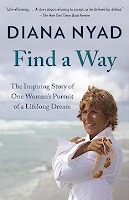
Find a Way by Diana Nyad

Find a Way by Diana Nyad is a great work of nonfiction about her life and 2013 swim from Cuba to Florida at the age of sixty-four. The trip covered 110.86 miles and took her 52 hours, 54 minutes, and 18 seconds. 

It’s a remarkable story of achievement and determination, with it Nyad’s fifth attempt to make the crossing. The first was in 1978, followed by some thirty years of no competitive swimming—when she instead worked as a journalist and broadcaster, reporting around the globe for Wide World of Sports—and then subsequent attempts in 2011 (two that year) and 2012 before the successful 2013 swim.

The book is a great personal story, one that covers the sexual abuse she received as a teenager at the hands of a swim coach, one who was never formally punished. She had a fascinating family, with a caring mother, and a charismatic, deceitful, and violent father. Nyad wrote about the eight years she spent with her mom after she was diagnosed with Alzheimer's before her 2007 death. Nyad turned 60 two years after that, and then decided to train again for another Cuba to Florida attempt.

The book features many great quotes, including from Nyad that life is not what we expect, and how she strove to tackle every day with no regrets, so that each could “not be done a fingernail better.” Also noted as important to Nyad is a Mary Oliver quote "tell me, what is it you plan to do with your one wild and precious life?"

It’s a great story of teamwork and pain endured, including the box jellyfish that were a constant source of life-threatening danger, and the reason for multiple failed attempts. The stories of stings, and then preventative measures taken to try to avoid them were remarkable. It was inspiring stuff from Nyad and a really good book.

The Lemon by S.E. Boyd

The Lemon by S.E. Boyd is a fun and entertaining novel written by Kevin AlexanderJoe Keohane, and Alessandra Lusardi, with S.E. Boyd a made-up author from the three writers of the book. 

They tell a story that starts with the death of Joe Doe, a beloved food travel show host, and then details the coverup of the more unseemly aspects of the hotel room death, including the actions of local Irish bellhop Smilin' Charlie McCree, and Doe's famous chef friend Paolo Cabrini. Two other great character in the book are Nia Greene, Doe's agent/business partner and Katie Horatio, a website writer who fabricates a connection with Doe and parlays it into an entirely new career.

It's definitely a fun read, one highly recommended.


Wednesday, May 31, 2023

Lessons in Chemistry by Bonnie Garmus

Lessons in Chemistry by Bonnie Garmus is an interesting and fun novel set in the 1950s, covering well what women had to deal with at the hands of men. There's a tremendous amount of heart and humor in the book and a compelling main character, and almost equally interesting dog of hers, Six-Thirty. It's really a nice read.


The Wager by David Grann

The Wager by David Grann is a good work of nonfiction subtitled A Tale of Shipwreck, Mutiny and Murder. Grann recounts the story of the British ship Wager that left England during a conflict with Spain in 1740, going after a Spanish ship filled with treasure. 

The ship made it from the Atlantic to the Pacific, going around Cape Horn at the bottom of South America through the Drake Passage, spending more than a month in the rough waters where the two oceans meet, and losing, many to scurvy, around 100 of the original 250 sailors. The Wager then went north off the Chilean coast of Patagonia and ran onto rocks in the bay Gulfo de Penas. The sailors got off the ship and took small boats to what would become known as Wager Island. Grann recounts what happened next, with some of the party leaving to create a splinter group, making alliances with some and abandoning others. The Wager's captain, David Cheap, couldn't control the men and then shot and killed a man under his command after they had been on the island for 41 days. While stranded, the men came across people from the KawĂ©sqar, an indigenousness group of a few thousand people. 

A group then said they were leaving for England through the Strait of Magellan back to the Atlantic, this after Cheap said he intended to continue with the plan to attack the Spanish on the Pacific coast. The men left and Cheap along with 19 others, not all of whom were still following him, stayed behind. 81 men went through the Strait of Magellan, then north. After three and a half months, and 283 days after the ship had last been reported seen, 29 men reached Brazil, the port of Rio Grande. Then six months later, 3 survivors appeared in Chile, leveling accusations against the first men who appeared in Brazil.

Some of the party returned to England, and then, two years later, Captain David Cheap appeared in England with two others. He and his companions had been captured by the Spanish and held for some time before being allowed to return home. Accusations and counter-accusations were hurled between the men, leading to an eventual military trial. Also interesting from the story was that Commodore George Anson of the group of six ships the Wager a part of ultimately was successful in his mission to plunder Spanish riches, garnering the equivalent of some $80M in today's dollars before his return to England, but with the cost the lives of some 1,300 of the 2,000 men under his command.