Monday, July 11, 2022

Where the Crawdads Sing by Delia Owens

Where the Crawdads Sing by Delia Owens is a well written and interesting novel that's a surprise mega-success. Its got over 12 million copies sold as of January 2022 and came out in the summer of 2018 to little advance acclaim, written by a first-time novelist. Owens is a retired wildlife biologist in her 70s, with her previous works nonfiction accounts of the decades she spent in Botswana and Zambia.

The book is set in the marshes of North Carolina between 1952 and 1969 and covers the story of a girl born exceedingly poor, living apart from society in a shack outside of town and forced to live on her own after first her mother, then siblings, and eventually father exit her life, leaving her to fend for herself from the age of ten. Her life and fleeting interactions with other people is chronicled by Owens and it's an engrossing story, blending together family trauma, natural history, romance, and mystery, and has been made into a movie executive produced by Reese Witherspoon.

The book has so many elements I love, it's good writing from Owens, about someone with a life completely different than I'm familiar with as she's living on her own in a fringe society of people eking out a life in the swamps, with the natural world heavily featured, and written by someone who lived in Africa among animals and who wrote an unexpected bestseller. It's great stuff and I enjoyed it quite a bit.

Thursday, June 30, 2022

Africa in My Soul by Cheryl King Duvall

Africa in My Soul by Cheryl King Duvall is a good book subtitled Memoir of a Childhood Interrupted.

Duvall was ten when her parents went to become missionaries in Africa, leaving behind in Georgia her fifteen year old sister and taking she and her two younger siblings to Nigeria. Her sister had to stay back and live with strangers, not because there wasn't a religious school she could attend in Africa, but because it wasn't the right type of religious school.

Duvall in Africa was stuck in mission boarding schools for 9 months of the year, under the care of people who forced the missionary kids to refer to them as auntie or uncle, and was the victim of an episode of sexual abuse by a doctor at the mission. Her story shows awful it is when parents think they're making sacrifices, in this case to become missionaries, but really they're making them on their children's behalf. 

The book shows the hardships Duvall faced in Africa, and also how the continent an amazing place, one full of beauty and also people who turned on one another, with there a civil war while she in Nigeria.

Saturday, June 18, 2022

Love is the Killer App by Tim Sanders

Love is the Killer App by Tim Sanders is a solid read from 2002 with the subtitle How to Win Business and Influence Friends. The idea put forth by Sanders is to be what he calls a lovecat, someone who gives freely to others, and the book is organized into three sections: your knowledge, your network, and your compassion. 

About your knowledge, Sanders writes that to be able to share information, you first have to acquire it. It's about books, reading lots of books, having a system to remember what you've read, and then passing on details to those it can help. 

About your network, Sanders notes to keep track of your contacts, write down details about the people you interact with so that you remember. Collect relationships and then connect people with one another, follow up and make introductions. 

About your compassion, Sanders quotes a definition of love as being the selfless promotion and growth of the other. He writes of the need to care, be human, and tell people things that matter which you may otherwise guard. Also highlighted is that compassion comes back; it refills those who give it.

Going back to the section on knowledge, Sanders notes to let reading be the thing that propels you, it doesn't require genius, and then you learn things, share them with your network, build out that network and help others. It's a good read from Sanders and some of the books he recommends are the following:

Net Gain by John Hagel and Arthur Armstrong

Information Masters by John McKean

The Brand Mindset by Duane Knapp

The Experience Economy by Joseph Pine and James Gilmore

Permission Marketing by Seth Godin

Customer Capitalism by Sandra Vandermerwe

The Innovator's Dilemma by Clayton Christensen

The Anatomy of Buzz by Emanuel Rosen

Getting in Your Customer's Head by Kevin Davis

Toward a Psychology of Being by Abraham Maslow

Leading the Revolution by Gary Hamel

Building Brandwith by Sergio Zyman and Scott Miller

Race for the World by Lowell Bryan, Jeremy Oppenheim, Wilhelm Rall, and Jane Fraser

Differentiate or Die by Jack Trout and Steve Rivkin

The Profit Zone by Adrian Slywotzky

Making it Happen by Mackenzie Kyle

The Circle of Innovation by Tom Peters

New Rules for the New Economy by Kevin Kelly

Sunday, May 29, 2022

Finding the Mother Tree by Suzanne Simard


Finding the Mother Tree by Suzanne Simard is a solid work of nonfiction subtitled Discovering the Wisdom of the Forest. Simard is a professor of forest ecology and she writes an autobiography about her life and work with trees in British Columbia, where she grew up in a family of foresters, with logging a big part of their lives. 

She describes the forest as a living organism, one where trees share with one another what they need to survive. She writes how rather than reducing certain types of trees, diversity is needed for a healthy forest, something that goes against the "free to grow" way forests previously had managed, with killing alder to to try to foster the growth of more valuable pine. Simard writes how trees are connected through a fungal network of mycorrhiza, and how if you kill the mycorrhizal fungi that connects the trees, you ultimately reduce the health of the entire forest, pine and all. 

The book jacket notes it as "a story of love and loss, of observation and change, of risk and reward" and it's a good mixture of ecology and personal memoir. Simard provides a dual narrative about connections, those in the forest and those in her life with those she loves. It's a compelling story which has been optioned for a movie starring Amy Adams and more can be learned about at https://mothertreeproject.org.

The Glass Hotel by Emily St. John Mandel

The Glass Hotel by Emily St. John Mandel is a well-written and interesting novel from the writer of Station Eleven. This book includes characters from Station Eleven and accomplishes the same feat of a sweeping story that includes characters through the years. 

In The Glass Hotel, Mandel writes of a woman who leaves behind her past working at a secluded hotel in British Columbia for a life of luxury with a financier in New York, only to have it taken away when his work revealed as a Ponzi scheme. It's an elaborate tale well told of she, her wealthy beau, her brother, and others in their lives.


Tuesday, April 26, 2022

Creativity, Inc. by Ed Catmull

Creativity, Inc. by Ed Catmull is by one of the co-founders of Pixar and a solid book subtitled Overcoming the Unseen Forces That Stand in the Way of True Inspiration.

Catmull writes how he in high school loved Disney animation, in part from the way Walt Disney explained the creation of it, and graduated from the University of Utah with degrees in physics and computer science and a Ph.D. in computer graphics. 

He was hired to try to start a computer animation company, and two years following the release of Star Wars in 1977, George Lucas hired him away to run his new computer division, with the primary product the Pixar Image Computer. Lucas in 1986 sold the Pixar division to Steve Jobs, with Catmull and John Lasseter remaining in charge. They began to make commercials along with short films. A three-picture deal was made with Disney in 1991, where Pixar would make the films, and Disney would produce and own them. In 1995, the first movie was released, Toy Story

It's a good book that has a number of solid insights on how to create and manage for a creative culture, with some of those (italics are mine) below:

Teams - If you give a good idea to a mediocre team, they will screw it up. If you give a mediocre idea to a brilliant team, they will either fix it or throw it away and come up with something better. 

Coaxing out ideas - It isn't enough merely to be open to ideas from others. Engaging the collective brainpower of the people you work with is an active, ongoing process. As a manager, you must coax ideas out of your staff and constantly push them to contribute.

Encouraging candor, stamping out fear - There are many valid reasons why people aren't candid with one another in a work environment. Your job is to search for those reasons and then address them. The same concept applies to fear in an organization.

Mechanisms for getting feedback - In general, people are hesitant to say things that might rock the boat. Braintrust meetings, dailies, postmortems, and Notes Day are all efforts to reinforce the idea that it is okay to express yourself. All are mechanisms of self-assessment that seek to uncover what's real.

Trust - It is the manager's job to make it safe to take risks. Trust doesn't mean that you trust that someone won't screw up. It means you trust them even when they do screw up.

Communication - A company's communication structure should not mirror its organizational structure. Everybody should be able to talk to anybody.

Interdependence - The healthiest organizations are made up of departments whose agendas differ but whose goals are interdependent. If one agenda wins, we all lose.

Candor - Good criticism or praise is specific. Also, feedback and candor is built on empathy, being in something together. 

Making the product great - Don't confuse the process with the goal. Working on our processes to make them better, easier, and more efficient is an indispensable activity and something we should continually work on, but it is not the goal. Making the product great is the goal.

Nothing to See Here by Kevin Wilson

Nothing to See Here by Kevin Wilson is a fun novel with a wild storyline...

Lillian and Madison were unlikely roommates and yet inseparable friends at their elite boarding school. Then Lillian had to leave the school unexpectedly in the wake of a scandal and they’ve barely spoken since. Until now, when Lillian gets a letter from Madison pleading for her help.

Madison’s twin stepkids are moving in with her family and she wants Lillian to be their caregiver. However, there’s a catch: the twins spontaneously combust when they get agitated, flames igniting from their skin in a startling but beautiful way. Lillian is convinced Madison is pulling her leg, but it’s the truth.

Thinking of her dead-end life at home, Lillian figures she has nothing to lose. Over the course of one humid, demanding summer, Lillian and the twins learn to trust each other—and stay cool—while also staying out of the way of Madison’s buttoned-up politician husband. Surprised by her own ingenuity yet unused to the intense feelings of protectiveness she feels for them, Lillian ultimately begins to accept that she needs these strange children as much as they need her. Couldn’t this be the start of the amazing life she’d always hoped for?

It was really an enjoyable read.

Thursday, March 31, 2022

The Eye Test by Chris Jones

The Eye Test by Chris Jones is by one of my favorite writers, someone who writes great kickers, or endings to stories. The book is subtitled A Case for Human Creativity in the Age of Analytics and the book jacket notes that Jones makes the case for the human element-for what smart, practiced, devoted people can bring to situations that have proved resistant to analytics. There's some great stories told in the book, with the ones that stood out to me from each section noted below...

Entertainment - Written about is the movie Chef, how it had two rather than three acts, never with the expected turn for the worse. Also there's a great quote from Teller, of Penn & Teller fame, with "sometimes magic is just someone spending more time on something that anyone else might reasonably expect." 

Sports - There's stories about baseball managers Mike and Justin Jirschele, pitcher Barry Zito, and carpenter Mark Ellison, profiled in a New Yorker piece.

Weather - Jones writes that "the more abnormal the situation, the more likely a skilled human will outperform a machine." This ties into the story of amateur weather forecaster Eric Berger, who through his website Space City Weather guided people through Hurricane Harvey and the calamitous rain and flooding it brought to Houston.

Politics - There's mention of the painstaking approach to research that Robert Caro took for his book The Power Broker. Also covered is the humanity of John McCain, and how that had scaffolding built around it as he became the Republican nominee for President, but then came out again in his concession speech. 

Crime - It's noted how something like facial recognition technology can be completely wrong if built built on faulty algorithms, often by people with biases. There's also a great quote from retired NHL player Shawn Thornton on time of possession, with it told by Eric Engels on his Twitter account. Also covered is the 2010 police interrogation of Russell Williams, later the subject of the CBC documentary episode The Fifth Estate.

Money - Jones tells the story of Kenneth Feinberg, a lawyer who dispensed the September 11th Victim Compensation Fund. He met with every person who was to receive money, and the first he met with, the widow of a firefighter, said that she wanted the money quickly, within 30 days. This was because she had terminal cancer and needed to establish a trust fund for her two soon to be orphaned children. Jones also covers how Feinberg on back to back days met separately with women who lost their partner and father of their children, with neither woman knowing that the deceased had a second family. Also covered in this section was the 2018 retirement news conference of Dallas Cowboys tight end Jason Witten and the story of Peter Good and his designing the iconic Hartford Whalers logo, with its use of negative space. 

Medicine - Narrative medicine is covered, the idea of treating patients not as cells that are either sick or healthy, but as people, with this humanizing of medicine something to benefit both patients and care providers.

The Alchemist by Paulo Coelho

The Alchemist by Paulo Coelho is a novel that features the main character following his heart, risking everything to seek out his destiny. 

The book is the tale of an Andalusian shepherd boy, Santiago, who has a dream of hidden treasure buried at the pyramids in Giza and goes to Egypt, in pursuit of his Personal Legend. 

The alchemist is someone he meets during his travels, someone who can turn lead into gold, and Santiago ultimately discovers what he was looking for, something that he couldn't have arrived at without going through the journey and struggle. It's very much a self-help book, and one of the quotes noted by Amazon as most highlighted in the Kindle version is "everyone seems to have a clear idea of how other people should lead their lives, but none about his or her own."

Sunday, February 27, 2022

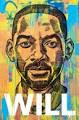
Will by Mark Manson and Will Smith

Will by Will Smith and Mark Manson is a solid portrait of the actor, with the autobiography written along with the author of The Subtle Art of Not Giving a F*ck, a solid book with parallels to this one.

Smith grew up in Philadelphia, the son of a successful business owner, one who also beat his wife, for the last time when Will was thirteen years old. Smith’s father saw the world in terms of commanders and missions and he and his siblings were pushed by their father to succeed through hard work. 

The book tells the story of a twelve by twenty cement wall that Smith and his younger brother were directed to build from scratch, when the boys were eleven and eight years old. The lesson from their father was that you show up and go to work, every day. This idea was latched onto by Smith as he developed first his career as a rapper and then movie star. He was a worker, working harder than others to get where he wanted to go. 

Smith was a natural comedian and entertainer when he was a kid and from his father he got discipline, from his mother, education, from his grandmother, love. Smith came from a broken home and as such, he wanted to be the pleaser, making everyone happy. He got introduced to hip-hop as a teen and practiced incessantly to be the best hip-hop MC. He was a senior in high school when he met Jeff, three years older than him and soon to be known as DJ Jazzy Jeff and Smith's longtime partner in music. They quickly became huge in the Philadelphia hip-hop scene, recording an album, having a hit song, and hitting the road on tour. At 20, Will was a famous rapper, winning a Grammy for best rap performance with he and DJ Jazzy Jeff's song Parents Just Don't Understand and selling three million records with their album, He's the DJThen their next album, In This Corner..., flopped. The gangsters he hung with in Philly were all likely about to go down and Smith left for Los Angeles after asking for money to get settled from his gangster friend, with that friend shot and killed three days later as people were turning on each other with the Feds closing in.

After moving to LA, Smith was in Detroit to do a concert and got a call from Quincy Jones who wanted him to come to his birthday party that night in Brentwood. There at the party, Jones asked Smith to do an audition showing he could act, thinking about what would become The Fresh Prince of Bel-Air. Smith at first was hesitant to do the audition then and there, wanting time to prepare, and Jones convinced him to do it as the opportunity was right in front of him. Smith read from a script for twenty minutes and before he left the party, there was a contract in place for him to shoot a pilot for the TV show. The party was in March 1990, the pilot episode aired in September of that year and the show became an immediate success. 

Smith set out to do movies, with one of his first Six Degrees of Separation, followed shortly after by Bad Boys, Independence Day, and Men in Black. He then received Academy Award nominations for Ali and The Pursuit of Happiness. Harkening back to the importance of hard work that he learned from his father, Smith saw that one of the secrets to being a global movie star is the gate outside the US, one of the secrets to that gate is promotion, so he put in more hours promoting his films than other actors did on theirs. 

It's a good story, one of hard work, but also one of being in the right place at the right time, and then when the opportunity presents itself, jumping at that. It’s also interesting reading later in the book of how that singular focus on achievement made things difficult with his wife and kids. He would put the same type of expectations on them to succeed that his father had put on him, and for him to achieve, he often had to focus on himself, and not his family. Additionally, his need to control, win, and be at the center of things jeopardized the happiness of his family. He had to accept and relax. 

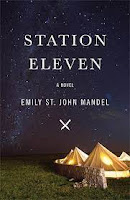
Station Eleven by Emily St. John Mandel

Station Eleven by Emily St. John Mandel is a novel that tells the story of pandemic that struck the world with lightning-fast ferocity, killing the large majority of people on earth. 

The story told is set twenty years in the future, with those who survived living not as citizens of countries, but rather in small settlements of people, living without electricity, surviving largely off the land.

The book does an interesting job of weaving together stories, featuring people as they are twenty years since the pandemic struck, what they were like at the time it occurred, and how their lives intersect with those of other characters. It can be a bit confusing at times keeping track of the connections, but it's an ambitious effort taken and an interesting story told in the novel.


Sunday, January 30, 2022

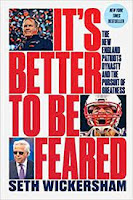
It's Better to be Feared by Seth Wickersham

It's Better to be Feared by Seth Wickersham is a solid biography of Tom Brady and look at the New England Patriots under Bill Belichick. There's a huge amount of ground covered well in the book and below are some of the sections from it that reflect on the Amazon Kindle app as those most highlighted by others:

"The New England Patriots were a subculture within a spectacularly unhealthy world. They were defined by many of the things that defined America during the first two decades of the current century: an embrace of overwork; a refinement of craft to a previously unseen level; empiricism and a love of data, along with the creation and marketing of pseudoscience; tribalism and both its cohesive and splintering features; the pursuit of agelessness; an erosion of ethics; and finally, a zero-sum ethos toward victory."

"All athletes, especially great ones-especially those with impossible expectations for themselves-swing between extreme confidence and extreme insecurity in a way unfathomable to fans."

"Belichick's football ideology was the lack of an ideology."

"For Brady, uncertainly prompted a strange reflex. Every time he was doubted, or he doubted himself, whether he admitted it or not, he upped the stakes, to prove others wrong and to prove himself to himself."

"He taught himself to love-to be addicted to-the feeling of improvement."

"Jerry Seinfeld was once asked how he summoned the will to be great at comedy, even after his legend was secure. He replied that it wasn't about will at all. Will was required to pass on cake after dinner; this was love. He loved everything about comedy, from finding the precise language for a joke to perfecting its delivery. Belichick was the same. 'I enjoy all of it,' he later said. 'It beats working.'"

"It might not be enough to just love your job. You had to want to live in the world the job created. Working with people you like, a tribe with a common goal, would make your professional life far happier than any accolade, salary, or a company's prestige could. You need to do the work you love, at a place and with people you love. You have to feel-Brady repeatedly returned to this work-'appreciated.'"


The Lincoln Highway by Amor Towles

The Lincoln Highway by Amor Towles is an engaging novel with compelling characters. The story is set in 1954 and features a young man recently released from a detention facility who embarks on a cross-county road with his young brother who he's responsible for, and which intersects with two others from the facility.

The book has a number of interesting people in it and they make choices other than might be expected, with those in some cases fascinating and in others, unsatisfying. The book certainly has its high points, but the ending of it feels to be a downer.


Sunday, January 16, 2022

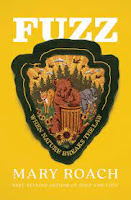
Fuzz by Mary Roach

Fuzz by Mary Roach features the subtitle When Nature Breaks the Law and the book jacket notes it as investigating the world where wildlife and humans meet. 

Chapters in the book include those on bears eating from trash cans, leopard attacks in India, determining if someone killed by animal, and counting cougars in the wild. 

Roach covers the lengths gone to in an attempt to mitigate the disruptive impact of animals on people. It's a quirky book and has some interesting stories in it, particularly those that involve life or death encounters between people and wildlife.

Thursday, December 30, 2021

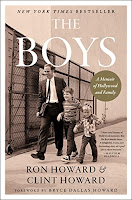
The Boys by Ron Howard and Clint Howard

The Boys by Ron Howard and Clint Howard is a solid autobiography from the successful Hollywood actors (and director in Ron's case). It's a good story of them growing up, with their parents help all along the way.

Things got started when their actor father Rance took 3 1/2 year old Ronny with him to see a casting director in New York City in 1957 and left word that he had a son who was a fine actor. Ronny got a part out of that and then in 1958, the family moved to Los Angeles at the suggestion of Rance's agent who said parts more plentiful there. 

Rance was getting scattered work, but Ronny regularly got acting jobs, as he says, almost every part he auditioned for. Ronny and later Clint were tutored by Rance who taught them to prepare for auditions and parts as professionals, not requiring excessive retakes and focusing on getting the emotions of the role right. Additionally, their father always spoke to them very matter of factly, explaining to them the adult behavior they often witnessed on sets. 

Ronny landed in 1960 a regular role as Opie on The Andy Griffith Show and Clint as a child had a starring role in the series Gentle Ben and went on to act in many Star Trek shows and other vehicles. Ronny later played the role of Richie Cunningham on Happy Days and had a large part in the 1973 movie American Graffiti from George Lucas. He then went on to make movies, with his first real job as a director on the movie Grand Theft Auto when he twenty-three.

The book is an interesting and nice story about brothers growing up with lives very different than most, being show-business kids starring in hugely popular TV shows and having to navigate public school and comments from classmates. There were other problems to contend with, including Clint's drug addiction, but the family remained close and supportive. Ron also notes how much later he was an executive producer on and offscreen narrator for the show Arrested Development, and in the final season, there's an episode where Ron, his wife Cheryl, their four kids, and Ron and Clint's dad appears.

Friday, December 24, 2021

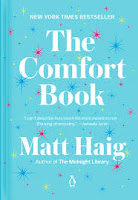
The Comfort Book by Matt Haig

The Comfort Book by Matt Haig is a nice read made up of short vignettes, with below from some of them:

A thing my dad said once when we were lost in a forest - If we keep going in a straight line, we'll get out of here. 

It's okay - It's okay to be broken. It's okay to like what you like. It's okay to be who you are.

Power - Our perspective is our world, and our external circumstances don't need to change in order for our perspective to change.

To remember during the bad days - It won't last. You have felt other things. You will feel other things.

One beautiful thing - Experience one beautiful thing a day. Just give yourself one simple reminder that the world is full of wonders.

Rain - You don't have to be positive. You don't have to feel guilty about fear or sadness or anger. You don't stop the rain by telling it to stop. It never rains forever. The storm may knock you off your feet. You will stand again.

Experience - We are not what we experience. If we stand in a hurricane, it doesn't matter how violent or terrifying the hurricane is, the hurricane is not us. The weather outside and inside us is never permanent.

Ferris Bueller and the meaning of life - This is a movie about Cameron. He is the emotional center of the film and makes the most significant transformation.

Growth - We grow through hard times. Growth is change. When everything is easy, we have no reason to change.

Clarity - You are here. And that is enough.

Realization - I used to worry about fitting in until I realized the reason I didn't fit in was because I didn't want to.

Aim to be you - If you aim to be something you are not, you will always fail. Aim to be you. 

Forgiveness - Forgiving other people is great practice for forgiving yourself when the time comes.

On Animals by Susan Orlean

On Animals by Susan Orlean is a solid book by the author of The Library Book, The Orchid Thief, and Rin Tin Tin among other nonfiction works. On Animals features various animal stories, with Orlean both as a third-party observer and first-party participant, and she notes "all of these creatures serve a purpose, even if that purpose is to have no real purpose other than to give a warm, wonderful, unpredictable texture to my life every day." 

Orlean provides compelling writing on both domesticated and wild or working animals, with some of the chapters that stood out noted below:

The It Bird - on raising chickens and how popular it's become

The Lady and the Tigers - including how there's more tigers in captivity than the wild

Little Wing - on homing pigeons and both that it's unclear how they navigate their way home, and if their owners move, they'll fly back to their original home if not enclosed

Where's Willy? - about Keiko, the orca star of the movie Free Willy, and the effort to release him to the wild, something never previously done with a captive killer whale

Lion Whisperer - about Kevin Richardson and his lions, also covers how little of the African wild is actually wild and the horror of lion hunting and negative effects of lion cub petting businesses

The Perfect Beast - on pandas and how unique they are

Lost dog - on the story of one couple's effort to find theirs

Farmville - on Orlean's life with animals and her moving from the New York countryside to Los Angeles

Sunday, November 28, 2021

Travels with George by Nathaniel Philbrick

Travels with George by Nathaniel Philbrick is a solid book subtitled In Search of Washington and His Legacy. Philbrick writes a first-person account of traveling with his wife and their dog on the same journeys that Washington took starting less than six months after his presidential inauguration in 1789.

Washington felt a great deal of pressure and consternation about being President and wanted to get out and be with the people of the fledgling country. He stayed in tavern houses and wanted to try to bring together Federalists who embraced the new constitution and Anti-Federalists who distrusted a strong central government. Washington started with a month-long tour of New England and the following year did a three-month-long circuit that took him to the South, covering thirteen states in total. 

It was interesting reading about Washington and his attempts to bring the country together, as well his attitudes and actions around slavery. There was also compelling mention of Washington's horrible teeth, and how wealthy people used to buy healthy teeth from others and implant them, replacing their rotted out teeth. 

The book is a good historical travelogue up and down the east coast, with Philbrick writing of his own life and interacting with people who would tell their stories of Washington and his actions. 

Thursday, November 11, 2021

The Greatest Beer Run Ever by John "Chick" Donohue and J.T. Molloy

The Greatest Beer Run Ever by John "Chick" Donohue and J.T. Molloy is a remarkable nonfiction tale subtitled A Memoir of Friendship, Loyalty, and War. Donahue writes how he was 26 years old in his neighborhood New York bar in 1967 when he decided to take several cases of beer to Vietnam and deliver cans from home to local boys fighting there. 

The book is a rollicking story of Donahue's time in Vietnam, finding some of the people he set out to track down, and keeping himself alive while in a war zone. It's not necessarily great writing, but it is entertaining reading about someone who set off on a crazy plan and then had wild and dangerous adventures. He was in Saigon, slated to leave for home when the Tet offensive was launched, with the Vietcong briefly taking over the U.S. embassy and personnel airlifted off the roof. 

Donahue expected he'd only be in Vietnam three days, but was there for four months and a movie based on the book and starring Zac Efron, Russell Crowe, and Bill Murray began filming in fall 2021.

The Life-Changing Science of Detecting Bullshit by John Petrocelli

The Life-Changing Science of Detecting Bullshit by John Petrocelli is an interesting book that examines the type of information that's presented by people who don't really care if it's true or not. 

Petrocelli is a professor of Psychology at Wake Forest University and he writes of how bullshit is a disregard of genuine evidence or established knowledge. Maybe a statement is true, maybe it's not, it doesn't really matter to the person making it, nor does it matter to them whether the result of these bullshit statements is harmless or dangerous. A bullshitter move is to refute fact and say that research is needed.

Also in the book is the idea of truth-default bias. People have at least a passive presumption that others are being truthful, so when an idea is heard, that idea is afforded the benefit of the doubt, even if it's blatantly false. Another concept is the ease at which someone remembers something determines how true that thing feels. People remember anecdotes more than they remember actual studies with hard data behind them, and when is something is in the mind, it takes effort to purge it. 

Petrocelli covers that the way to combat bullshit is to have an attitude of skepticism and a practice of questioning, utilizing critical and scientific thinking skills. We need to compel bullshit artists to prove their thoughts and theories, asking them to clarify their claims. Give people a chance to correct themselves and if they don't, treat bullshit like lies, not like harmless statements that we write off as just things certain people say.

Monday, October 04, 2021

The Deepest South of All by Richard Grant

The Deepest South of All by Richard Grant is an interesting work of nonfiction about Natchez, Mississippi. The book is noted to be part history and part travelogue and details a very different world than most people know.

Natchez is a town of ~15,000 on the Mississippi River across from Louisiana and is described as more like New Orleans than the rest of Mississippi and a city conflicted about whether it should be celebrating its past or breaking free from it. Natchez elected with 91% of the vote a gay black man for mayor, yet prominent white families dress up in elaborate hoopskirts and confederate uniforms for celebrations of the Old South. The book jacket notes that Natchez once had more millionaires per capita than anywhere in America, with much of that wealth built on cotton slavery, and the town and surrounding area contain the greatest concentration of antebellum homes in the American South. Women from two competing garden clubs ever year host Pilgrimage, where they put on hoopskirts and receive, or welcome visitors into their homes and ply them with tales of confederate days. Additionally, the Tableaux is an annual pageant that started in 1932 and features celebration of the good old days. 

Grant portrays a town where most people, even those hosting events like this, aren’t racist, but don’t want to let go of celebrating a past which clearly was racist. The description from a quote is that they love their history, but their own self-serving mythological version of that history. It’s such an interesting conflict between people respecting history as it actually was and those wanting to keep up the parts of the past they like, such as the pretty buildings, while also trying to have tourism money keep flowing into the town.

Also in the book are the stories of Prince Ibrahima from Futa Jalon (what is now Guinea) and his enslavement in Natchez and his late in life effort to return to his homeland, the failing public schools, the famous thriller writer Greg Iles who lives in town, and the Santa Claus Parade that features men getting drunk and driving around behind police escorts and giving out Christmas presents and dinners to the poor.

Saturday, October 02, 2021

High Conflict by Amanda Ripley

High Conflict by Amanda Ripley is a good book subtitled Why We Get Trapped and How We Get Out. Ripley wrote The Smartest Kids in the World and this latest one examines conflict that devolves into an us vs. them paradigm (often leading to everyone being worse off), what causes high conflict, and how to escape it. 

The first story she covers is that of Gary Friedman, a conflict mediator, author, and former trial lawyer who ran for and won a seat on the Community Services District Board of Directors in his small town of Muir Beach, CA and then wound up in high conflict. Additionally, Ripley writes of a former gang leader in Chicago who would have killed to avenge a death not actually caused by what he thought, Columbia financially supporting people who forsake conflict with the government of the country and lay down their weapons, and the interactions between groups of conservative Michigan corrections officers and liberal Manhattan Jews.

Some of the terms that Ripley notes as important in examining whether a given situation is one of high conflict as opposed to healthy conflict are confirmation bias (interpreting new information as confirmation of one’s preexisting beliefs), looping for understanding (actively listening by reflecting back to someone what they seem to have said and checking to see if that summary was correct), and saturation point (that point in a conflict where the losses seem heavier than the gains and there’s opportunity for change).

In the appendix, Ripley notes that some of characteristics of healthy conflict vs. high conflict: 

Humility, fluidity, complexity, novelty, passion, curiosity, and questions.

Certainty, rigidity, simplicity, predictability, righteousness, assumption, and advocacy.

Friday, October 01, 2021

Hit Makers by Derek Thompson

Hit Makers by Derek Thompson is a solid book subtitled The Science of Popularity in an Age of Distraction. It was published in 2017 and Thompson notes that he wrote a book about hits, those products and ideas that achieve extraordinary popularity and commercial success in pop culture and media. There's a focus on the secret to making things that people like in culture and why some things fail while similar things become hits.

Thompson notes that people like things that are familiar but presented in an original way, or the marrying of the old and new. People gravitate to the theory of MAYA (most advanced, yet acceptable); otherwise stated, people are attracted to the new, yet resistant to the unfamiliar. This is why people often compare companies to other better-known ones, with phrases like “Uber for…” A huge commercial success example of this idea of new, but still familiar was the movie Star Wars, something popular in part because it was written by George Lucas as a space western, alluding to stories people had seen from the past. Around the idea of myth-making, Thompson refers to the PBS show The Power of Myth on Joseph Campbell and his writing. Also in reference to the success of Star Wars is how Lucas wrote it for a 10-year-old boy, with that an example of how the biggest hits are often created for the smallest audiences, it’s good to have a tightly defined target.

Another example of a hit that Thompson covers is that of Fifty Shades of Grey, a book written as Twilight Fan fiction with the main character Edward reimagined as a corporate tycoon. Additionally, Thompson notes that repeated exposure is also a huge factor, you see something more frequently and as it becomes familiar, it rises in your esteem. This correlates to the notion that we like things we generally agree with, which of course can lead to harmful like-mindedness. 

Also of interest from Hit Makers is Thompson’s mention of various rhetorical devices in writing: epistrophe, anaphora, tricolon, epizeuxis, diacope, antithesis, parallelism, and what Thompson notes as the king of speech-making tricks, antimetabole. When Jon Favreau wrote for President Obama, he kept in mind that speeches are like songs, they require hooks, choruses, and clear structures, as well as repetition. 

Thursday, September 30, 2021

Why Fish Don't Exist by Lulu Miller

Why Fish Don't Exist by Lulu Miller is an interesting and profound work of nonfiction subtitled A Story of Loss, Love, and the Hidden Order of Life. Miller chronicles the life of David Starr Jordan, the first President of Stanford University, and a renowned taxonomist. 

Jordan embraced classifying fish, with Miller noting that he credited with discovering nearly a fifth of the fish known to humans in his day. It was fascinating reading of how Jordan suffered multiple personal calamities, and after each tended to plunge deeper into his work, in essence trying to bring order to chaos. For instance, after his collections were destroyed by the 1906 San Francisco earthquake, he immediately set out rebuilding. Miller writes of how that Jordan’s ability to carry forward also came with a lack of doubt his beliefs, something that at first seems positive, but can become a grave negative. Jordan (whose name is many places at Stanford) believed strongly in the principle of eugenics, or breeding out imperfections from humanity with atrocities like forced sterilization. Also, Miller writes of how Jordan quite possibly had the namesake of the university, Jane Stanford, killed by strychnine poisoning.

The title of the book came from how in the 1980s, many taxonomists began to say that they didn’t believe there is a simple classification called fish, there’s too much variety in what we might consider fish, and too many of them are like what we wouldn’t consider fish. This changed view is interesting to consider juxtaposed with Jordan's lack of doubt in how he went about his life and work.

The book jacket notes that it part biography, part memoir, and part scientific adventure, and Miller writes of how as she researched Jordan and his efforts to establish order from chaos, she was attempting to do the same in hers. I enjoy books that have this sort of duality in them, with the writer examining someone else’s life while also looking at their own and Miller at the end of the book noted that what she found was a life that matters to her, and that the chaos that she faced, and Jordan spent his life combating, can also bring good things. 

Monday, September 06, 2021

Why We Swim by Bonnie Tsui

Why We Swim by Bonnie Tsui is a contemplative and interesting book that's noted to be an exploration of the world of swimming. The point is made that we must learn to live with water, it’s required for us to survive, and is all around us. Also, swimming can be a way to healing, health, and a community. 

Tsui details stories including someone's survival off the coast of Iceland, spending six hours in 28 degree Fahrenheit water and swimming three and a half miles to safety. Also, swimming in outdoor water is heavily written of, with likely health benefits from cold water swimming, and someone doing it is part of the elements. The Dolphin Club and South End Rowing Club in San Francisco are noted for their swimmers who go into the Bay, including one who swam 30 miles from the Farallon Islands to the Golden Gate Bridge, 17 hours through shark-infested waters.

It's also covered that people enjoy swimming more than many other forms of exercise and that swim lessons are an equalizer between people. No matter how powerful someone is, if they don’t know how to swim, they're the same as others from a lower stature or different culture. Additionally, swim teams can be a great combination of singular determination and being part of a collective. 

A couple of other things that stand out from the book are Japanese swimming martial arts, or Nihon eiho, and samurai swimmers from hundreds of year ago. Also, when you swim, you’re a part of a collective, and swimming in a body of water is a way of forging a connection with it, and with others who have swam there. 

Amazon Unbound by Brad Stone

Amazon Unbound by Brad Stone is subtitled Jeff Bezos and the Invention of a Global Empire and follows up on The Everything Store by Stone from 2013. In Amazon Unbound, it notes that at the end of 2010, Amazon had 33,700 employees and a market capitalization of $80B, with the net worth for Bezos at $15.9B. Amazon as of early Sept 2021 has roughly 1,300,000 employees and a market cap around $1.6T, with Bezos' net worth some $200B. Amazon Unbound details this exponential growth, with below the chapters and primary topics...

Chapter one – on the building of the Echo

Chapter two – on early efforts to create Amazon grocery retail stores

Chapter three – on Amazon in India

Chapter four – on AWS and Amazon stock doubling in 2015 after previously hiding its profitability to keep competitors out

Chapter five – on Bezos and his ownership of the Washington Post, purchased in 2013 for $250M

Chapter six – on efforts in Hollywood and Prime video

Chapter seven – on the Amazon flywheel leading to growth, counterfeit goods, and unhappy merchants

Chapter eight – on efforts in grocery and the 2017 acquisition of Whole Foods

Chapter nine – on logistics and supply chain

Chapter ten – on selling ads in Amazon site search results

Chapter eleven – on Bezos' Blue Origin space startup, founded in 2000

Chapter twelve – on the relationship with and impact of Amazon on Seattle and other cities with its HQ2 bakeoff

Chapter thirteen – on the breakup of Bezos’ marriage, including extortion and potential Saudi hacking 

Chapter fourteen – on government investigation into potential monopolistic and anti-trust behavior by Amazon

Chapter fifteen – on the pandemic, including the Amazon firing of whistleblowers around worker safety

Thursday, August 26, 2021

Radical Candor by Kim Scott

Radical Candor by Kim Scott is a solid book with the subtitle Be a Kick-Ass Boss Without Losing Your Humanity. Scott notes that at the heart of being a good boss is having good relationships, ones built on radical candor. From this, a boss can provide guidance to produce better results and help employees achieve. 

It’s detailed that the role of a boss is to listen to their employees and to care personally about what they have to say. A boss should start by asking for feedback and criticism, not by giving it out, and understand what motivates each person. In 1:1 meetings, employees should set the agenda and a boss should be a partner, not an absentee manager or a micromanager, and from this, trust gets built.

Along with this foundation of trust, a boss should tell people clearly and directly when their work isn’t good enough. It’s not mean, it’s clear, and it should be provided in the moment and be about the actions, not the person. Also, everyone can be exceptional at something, it’s the role of the boss to help them find that thing. Scott as well details what she calls the get stuff done wheel: listen, clarify, debate, decide, persuade, execute, learn, listen again…

Listen – give the quiet ones a voice, create a culture of listening

Clarify – if someone doesn’t understand, the fault may be with the person making an unclear argument 

Debate – focus on ideas and not egos, create an obligation to dissent, be clear about when the debate will end

Decide – the decider should get facts, not opinions

Persuade – focus on the listener’s emotions, demonstrate your credibility, and show your work

Execute – don’t waste people’s time

Learn – be willing to course-correct

There’s a number of solid things by Scott in the book, both for a boss and for an employee of a boss.

Sunday, August 22, 2021

The Premonition by Michael Lewis

The Premonition by Michael Lewis is subtitled A Pandemic Story and covers some of the major players in U.S. pandemic response (or lack thereof) at a county, state, and federal (particularly the CDC) level. 

Lewis notes in the introduction that the United States has a bit more than 4% of the world’s population and as of Spring 2021, had a bit more than 20% of its COVID-19 deaths. In February 2021, The Lancet published a piece noted that if the COVID-19 death rate in the U.S. had tracked at the average of the other G7 nations, 180,000 of the then 450,000 dead would still be alive.

The book covers how decentralized the federal government is and yes, it got worse under Trump, but it wasn’t great to begin with. It’s remarkable how ineffectual the CDC is written of as being, and how many county health officers assume that the CDC will provide guidance and leadership. The CDC mentality was described as focused on taking no action they could be blamed for later. Lewis notes what a loss it is that many brilliant and capable people leave government work to be more well treated and respected in the private sector. 

It's covered how President George W. Bush in 2005 read the John Barry book The Great Influenza and demanded that a pandemic plan be created. Richard Hatchett and Carter Mecher were two people involved in the creation of the plan and what they wrote was that lives could be saved by taking measures before vaccines available. Additionally, a scientist named Bob Glass figured out along with his high-school-aged daughter how infectious disease transmission could be limited. One of the things that they espoused was school closings, especially giving how tightly confined kids were in school. 

Charity Dean is a former chief health officer for Santa Barbara County, and in that role, was struck by the power she had to combat communicable diseases and relentlessly tracked down potentially cataclysmic public health crises. California was noted as unusual with control held at the county health officer level, for most other states, it was the state health officer or governor. As we went in the pandemic, Dean was second in charge at the California Department of Public Health, with the person in charge for the state, Karen Smith, having no experience in communicable diseases and a see no evil, hear no evil approach. She in late February had a call with the 58 county health officers in California and said they on their own, same as Trump said to the states.

Hatchett, Mecher, Dean, Lisa Koonin and a handful of other people, some 5-10 in total, were in contact by early 2020 and all felt that a pandemic was coming, despite the statements from the CDC and White House. It’s described as being like the Mann Gulch fire, burning out of control, but people don’t realize it yet. From their calls and emails emerged actions cherry picked from by the actual government.

Lewis throughout the book writes of the things that should have been done that simply weren’t, and how we should have learned so that we prepared for a virus with the same level of communicability, but a greater potency and fatality rate.

Thursday, August 05, 2021

Atomic Habits by James Clear

Atomic Habits by James Clear is a solid book with the subtitle An Easy & Proven Way to Build Good Habits and Break Bad Ones. It’s a fast read with lots of tangible steps to take and systems in it. 

Clear starts with the attention-grabbing story of getting hit square in the face with a baseball bat in high school, almost losing his life. He writes about the habits he started to build while in college, with habits defined as a routine or behavior that is performed regularly—and in many cases, automatically. Small habits that accumulate can make a big difference, working on the same principle as compound interest. Also, your outcomes are a lagging measure of your habits, often without huge changes until eventually leading to exponential results. Goals are the results you want to achieve, and systems the more important processes that lead to those results. 

The book details how behavior change is about outcomes, processes, and identity, with the most impactful identity, being someone who does something or does things a certain way. For instance, “I’m not a smoker” rather than “I want to quit smoking.” Your habits are how you embody your identity. As you do something, you become that thing and the best way to change who you are is to change what you do. Clear notes that people should first decide the type of person they want to be, then prove it to themselves with small wins. Habits can change your beliefs about yourself and are mental shortcuts learned from experience. Clear notes that to build better habits, one should make it obvious, make it attractive, make it easy, and make it satisfying:

1. Make it obvious - The first step is to simply notice what your habits are. From there you can take actions. You can make a specific plan of steps to take that are to become a habit, and the more specific, the better. Make the habits you want right in front of you to implement. For instance, if you want to eat healthy, buy fruit and put it out on the table for you to grab from. 

2. Make it attractive - You can pair an action you want to do with an action you need to do. For instance, if you do ten 10 burpees, you can check your social media. A good way to build better habits is to join a group where your desired behavior is the normal behavior. 

3. Make it easy - Habits aren’t hard to form, they simply come from reps. You can set yourself up for success at forming habits by priming your environment so the habit easy to do. Remove the friction associated with good behaviors, increase the friction associated with bad behaviors. It’s ok to reduce your habits at first, to make them small. For instance, reading at night can begin with “read for two minutes.” Just show up, don’t worry about what happens next as in doing so repeatedly, your identity becomes that of someone who shows up. 

4. Make it satisfying - It’s good to create rewards for good behavior. For instance, using toothpaste that leaves your mouth feeling good. The brushing is what’s important, but the taste is what’s satisfying. A habit tracker is a simple way to feel good about what you’re doing. A good way to think about falling short on doing something is the law of two, it’s ok to miss something once, you don’t want to miss it twice. Don’t be too hard on yourself. 

Towards the end, Clear notes that the goldilocks rule states that people experience peak motivation when working on tasks that are right at the edge of their current abilities. The greatest threat to success is not failure, but boredom. Anyone can work hard when they feel motivated, but you have to work through boredom. It’s the ability to keep going when work isn’t exciting that makes the difference. Habits + deliberate practice = mastery.

Sunday, August 01, 2021

The Four Winds by Kristin Hannah

The Four Winds by Kristin Hannah is an engrossing novel that felt like it could be a nonfiction account. 

Hannah tells the story of Elsa Wolcott, who in 1920s Central Texas was pregnant and cast out by her parents, joining with what would turn out to be a abandoning husband and father in Rafe Martinelli and his saint-like parents Tony and Rose. 

By 1934, the Martinelli family farm was barely producing crops as drought and dust storms ravaged the land and created enormous poverty, along with health problems for Elsa's son Anthony. She takes he and his sister Loreda to California in search of a better life and is met there by the continued Great Depression and xenophobia against migrants from the Dust Bowl. The story that Hannah tells set in the San Joaquin Valley continues to be a captivating one as Elsa fights to keep her children sheltered and fed in a harsh and unforgiving environment stacked against migrant workers not in a position of power. 

It's an excellent book that provides a story that seems taken straight from history and shows one woman's fight for her family and the importance of caring about one another in the face of hardships. The tale that Hannah eloquently writes is of a time and events that should be remembered and she notes her website containing a suggested reading list about the Dust Bowl years and migrant experience in California.

Tuesday, July 27, 2021

The Dip by Seth Godin

The Dip by Seth Godin is a short and solid book about the decisions we make to either stick with things or quit them. He makes the point that single-minded determination and a never say die attitude not always a good thing, it often is better to move on from something and focus energies elsewhere.

The idea of the dip as Godin describes it is the hard period of something, the long slog between starting and mastery. Almost everything has a dip. It’s supposed to be there and is in effect a barrier to entry that creates value. Also, Godin points out that many professions have superstars and then a bunch of also-rans. Second or third place isn't a terribly successful place to be. The goal really should be to be the best at something, even if it a small area, not to muddle your way to an ok level of competence. Pushing through the dip is a good thing, what you don't want to do is quit in the middle of the dip, when it's hard, but still worth it to succeed. 

It's noted that along with dips, there's also cul-de-sacs, spots where no matter how hard you try, things won't get better. Those are the dead ends that should be abandoned. Godin also points out that coping is a lousy alternative to quitting. All coping does is waste your time and misdirect your energy. If the best you can do is cope, you're better off walking away. Highlighted is that winners quit fast and often, and then beat the right dip for the right reasons. Quitting the things you don't care much about, are mediocre at, or aren’t going anywhere (a cul-de-sac) frees you up to push through the dips on the things that do matter. When you are ready to quit something, go for broke, be willing to ask for what you want, and willing to walk away. Going into new situations lets you reinvent yourself; you've left behind those who have branded or pigeonholed you.

The right idea isn't "never quit," the right idea is "never quit something worthwhile just because it's hard at that moment." Don't quit your strategies, quit your tactics, and remember that a particular job is tactic, not strategy. Getting through the dip is never quitting the big idea. "Quit the wrong stuff. Stick with the right stuff. Have the guts to do one or the other." 

How Lucky by Will Leitch

How Lucky by Will Leitch feels full of contradictions, with those combining together into a really good novel. 

It's about someone with SMA, or spinal muscular atrophy, a disease that typically has symptoms appear in early childhood and eventually leaves a person confined to a wheelchair, unable to speak. They're mentally sharp, but with a body that didn't sign up for the ride. It's described in the book as akin to Lou Gehrig's Disease, or ALS, but with it coming much earlier in life and having a much longer deterioration period. Also, SMA is a progressive disease, once a body part fails, that function is gone, and that's the way it's going to remain. 

Along with being about someone who has a debilitating disease, the book also is a nice story, one about someone living their life, the people who love them and they love in turn. The best people in the main character's life are those who don't feel sorry for him, but treat him like the real person he is.

Leitch set the book in his town of Athens, Georgia and noted writing it after his friends had a child with SMA. The story is a lot of  things, it's a mystery about an abduction, funny, and heartwarming, with the main character narrating "I have helped people, and I have people who have helped me."

Sunday, July 11, 2021

Madhouse at the End of the Earth by Julian Sancton

 Madhouse at the End of the Earth by Julian Sancton is a solid work of nonfiction about the expedition of the Belgica, which sailed in August 1897 from Belgium for Antarctica, attempting to reach the magnetic south pole. 

The ship was under the command of Adrien de Gerlache, from a distinguished Belgian family and in his early 30s when the expedition began. It was funded in part by a national subscription campaign, with some 2,500 Belgians contributing donations, and de Gerlache would have liked to have the ship have an entirely Belgian crew, but to fill the roughly twenty spots had to enlist many non-Belgians, including American Dr. Frederick Cook and Norwegian Roald Amundsen. de Gerlache was neither a good manager of the crew nor particularly good decision-maker, with many of his choices driven less by prudence and more by concern about how his Belgian benefactors and the press would look upon him in the future.

 A man was lost overboard on the way from South America to Antarctica and de Gerlache had assured those who signed up for the expedition that they would not winter in Antarctica. However, once they at the continent in early 1898, he made the choice to sail into the ice rather than abandon the quest to be the first to the magnetic south pole. de Gerlache knew that they would get stuck in the ice of the Bellingshausen Sea for the winter but concealed his intent from the crew. The sun went down in mid-May for close to seventy days of 24-hour darkness. de Gerlache during the Antarctic winter spent much of his time sequestered in his cabin with horrible headaches and one of the men had a weak heart and died during the arctic winter. The men started to suffer from scurvy, with their conditions then improving for those who would eat seal or penguin meat, but de Gerlache largely refused, sticking with the canned goods that he planned for and his backers paid for.

Crew members Cook and Amundsen became close during the expedition and were the two most hearty polar explorers, with each of them leading future expeditions and especially Amundsen becoming well-known for his accomplishments. As the crew moved into the Antarctic summer of October and November, one of the sailors began have his mental state deteriorate rapidly and it noted in the book that the second Christmas aboard the ship was a grim affair, with it becoming apparent that many of the men would not survive a second Antarctic winter and the food stores were being rapidly depleted. A plan was hatched to cut trenches in front of the ship, trying to create a waterway for the Belgica. Initial progress that was made was lost at the end of January when the ice pack shifted, but then on March 14, 1899 they broke out of the ice.

Upon their return to civilization, one man had lost his sanity while stuck in the ice and was committed to an asylum and another died after growing sick during the expedition. It would take de Gerlache a year to regain his health after the trip and Amundsen and Cook both embarked on other expeditions not long after the Begica’s return. Amundsen became an acclaimed polar explorer and Cook was as well for a time, until his exploits, specifically a claimed journey to the geographic north pole was called into question. Cook’s membership to the New York Explorer’s Club, of which he was president, was revoked and then then became an oil speculator and was convicted of fraud and sent to prison. Overall, it’s an interesting book with tales of danger, bravery, and horrific decisions. 

Saturday, July 03, 2021

A Knock at Midnight by Brittany Barnett

A Knock at Midnight by Brittany Barnett is a great book subtitled A Story of Hope, Justice, and Freedom. It’s a memoir about her growing up in central Texas, having a mother who went to jail for a drug offense, then becoming a lawyer advocating for the release of people serving life sentences without parole for drug offenses. 

Barnett grew up first in the small Texas towns of Fulbright and Bogata and was ten when she found her mother’s crack pipe in the house. She along with her sister Jazz went to live with their father and grandparents in nearby Campbell and it was difficult having a mother who was an on again, off again addict. Barnett when she started high school moved to Commerce to live with her other grandparents and get away from her mother’s addiction. She in college studied accounting, receiving a bachelors and then masters degree, with her mom unable to attend the graduation as she was in jail, sentenced to 8 years in prison for repeatedly failing drug tests while on probation for an arrest 6 years prior. Barnett notes how in her county growing up, blacks were 34 times more likely to be charged for marijuana possession than whites.

Barnett was a first-year law student at SMU, taking a class on the intersection of race and law, when she came across the case of Sharanda Jones, someone who had served ten years of a life sentence for a first-time drug offense. The environment under which Jones arrested was one with drug laws focused on punishment rather than rehabilitation, which is what sent Barnett’s mother to jail, and one with a racial bias. There was a sentencing disparity of 100 to 1 between crack and cocaine and prosecutors had enormous latitude to charge people with conspiracy to distribute drugs, a charge that required no physical evidence to prove. Additionally, mandatory minimum sentences were attached to many cases, effectively taking sentencing out of the hands of judges or juries. Prosecutors would also frequency focus on flipping defendants, even having higher-level dealers testify against lower-level dealers, and stacking charges or adding on 851 enhancements, bringing into sentencing past transgressions, no matter how small. 

When Jones was sent to prison on a conspiracy to distribute charge, she had been a low-level mover of drugs, was no longer involved, and entrapped by a friend looking to be an informant and get a lesser sentence. Jones was told by prosecutors she as well could get a lesser sentence if she flipped on her Dallas police officer friend, someone not involved at all with drugs. Jones didn’t testify against anyone else and after her lawyer told her she would likely go free, and worst case would have a five-year sentence; she was sentenced to life without the possibility of parole, going to prison when her daughter eight years old. 

While still in law school, Barnett began advocating for Jones, and continued to do this pro bono work as she became a corporate lawyer in a large firm. She in the book details the dehumanizing conditions for inmates, including visitors having to ask for people by their prison number rather than name. While Barnett trying to get Jones released, mandatory sentencing guidelines were ruled unconstitutional, but not retroactively. Barnett then felt that the best path to release was clemency, something that could be granted by the President and noted in the book as being described by a fellow lawyer as “where justice meets mercy.” Barnett mentions a 2015 Washington Post story by Sam Horwitz on Jones and others serving life sentences without the possibility of parole, even though they would have received lesser sentences under current guidelines, and Jones was pardoned by President Obama, with release in 2016. Also noted in the book are others that Barnett would help get clemency, including Donel Clark, Alice Johnson, Corey Jacobs, and Chris Young  (with the judge that sentenced him, Kevin Sharp, having left his seat because he felt mandatory minimum sentences were wrong).

It’s a remarkable story from Barnett about a grave injustice. Also interesting was both how strong the writing in the book is (it seems many lawyers are often good writers) and how Barnett before she left corporate law combined her accounting degree and the tangible skill it gave her with the tangible skill from her law degree.

Friday, July 02, 2021

Freedom by Sebastian Junger

Freedom by Sebastian Junger is a short book with interesting ruminations on his roughly year-long walk up the East Coast of the U.S. He and several friends, including a conflict photographer and two Afghan War vets, walked around 400 miles, illegally traveling along on rail lines, many through small towns that were dying away, and the book covers well this time of him simply walking, moving forward with self-reliance.

Junger previously wrote Tribe, War, Fire, A Death in Belmont, and The Perfect Storm, with all of them good books and Freedom being particularly like the first three with it examining the history of something and Junger's thoughts on it. There's a lot about the people of America and government in it and the book covers how it important to remember what happened in the past. Junger writes that "the idea that we can enjoy the benefits of society while owing nothing in return is literally infantile. Only children owe nothing." It's a good book, with other quotes from it...

"In a deeply-free society, not only would leaders be barred from exploiting their position, they would also be expected to make the same sacrifices and accept the same punishments as everyone else." 

"An insurgency or political movement with leaders who refuse to suffer the same consequences as everyone else is probably doomed. Unfair hierarchies destroy motivation, and motivation is the one thing that underdogs must have more of than everyone else." 

"If democratic power-sharing is a potent form of freedom, accepting an election loss may be the ultimate demonstration of how free you want to be. History is littered with fascist leaders who have rigged elections and tortured or killed critics, but their regimes are remarkable short-lived, especially considering the obsession these men usually have with holding power. Many wind up dead or in prison, and almost none leave behind stable regimes."